Sunday, August 8, 2021
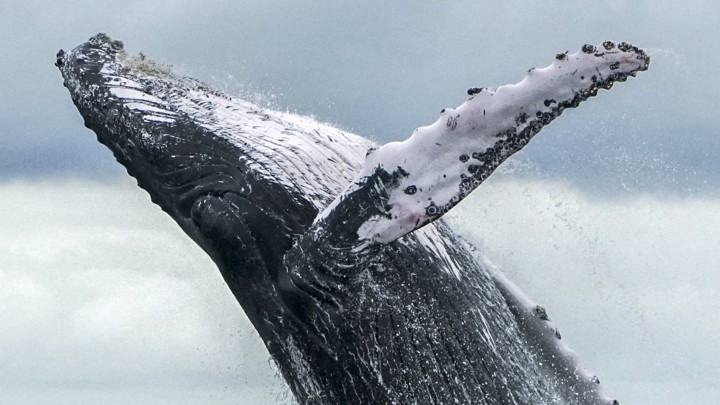
DISTANCE LEARNING: Stuck at home with the Kid's. Here's a fun whale project to keep them busy!
Tuesday, June 15, 2021
WHALES: New publication: WhaleMap: a tool to collate and display whale survey results in near real-time
My co-authors and I have developed an open source software tool called WhaleMap (available at whalemap.org) to collate and display whale survey results in near real-time. It is described in our recent publication in the Journal of Open Source Software:
Wednesday, May 19, 2021
RIGHT WHALE: A New publication on possible right whale habitat suitability in 2050
On behalf of my co-authors, I would like to announce a recent peer-reviewed publication on projecting right whale habitat suitability in 2050.
North Atlantic right whales (Eubalaena glacialis) are critically endangered, and recent changes
Thursday, April 29, 2021
WHALES: New book on North Atlantic right whales
Scott Kraus, Marilyn Marx, Heather Pettis, Amy Knowlton, Ken Mallory
Publisher: Fitzhenry and Whiteside, Markham, ON
Paperback/140 pages
Disappearing Giants tells the story of one of the most endangered large whales in the oceans today, from the whaling history for which it is named, to the most up-to-date research efforts and population status. Illustrated throughout with beautiful photos, it describes how individual right whales are identified, how they feed, migrate, and face the challenges of life in the industrialized North Atlantic Ocean. The authors, long-time right whale researchers from the Anderson Cabot Center for Ocean Life at New England Aquarium in Boston, hope this book will bring awareness to this wondrous but threatened whale species and the tremendous efforts being taken to help North Atlantic right whales avoid extinction and thrive far into the future.
To order a copy please visit rightwhaleresearch.bigcartel.com
Wednesday, October 2, 2019
Why are right whales roaming into danger off the East coast? | CBC Radio
Changing oceanographic conditions mean whales are not where they once were

Tuesday, October 1, 2019
WHALES: DFO confirms second endangered blue whale found dead in Gulf of St. Lawrence

Sunday, September 15, 2019
WHO WOULD HAVE THOUGHT! The History of the Oceans Is Locked in Whale Earwax
ED YONG, NOV 21, 2018
The History of the Oceans Is Locked in Whale Earwax

Wednesday, October 3, 2018
ISSUES: U.S. considers further measures to protect North Atlantic right whales
There are a million vertical fishing lines in the path of the right whales, says U.S. ocean agency

P.E.I. fisherman Joey Gauthier has been apprehensive that sightings of North Atlantic right whales would shut down the fishery for lengthy periods of time, causing a loss in income. (Katerina Georgieva/CBC)
Single sighting shuts down fishery
"They closed the lobster fishery in an area that hadn't harmed a whale in several
Saturday, October 7, 2017
GRAND MANAN: Tuna, sharks and whales ... fishing in 1934
| Southern Weirs Hold the Record |
Friday, August 12, 2011
Sperm Whales back in Bay of Fundy
Get the pictures and subscribe at: http://fundytides.blogspot.com
Saturday, February 27, 2010
Calais LNG whale assessment submitted to FERC - woefully inadequate!
As marine biologist Art MacKay, who has been mapping whale sighting data in the Quoddy area, stated last summer, Head Harbour Passage was "plugged with whales." (See Art's whale-sightings map at the top-left of his I Love Quoddy Wild website. Or go directly to a larger version of his Fundy Whales map on CommunityWalk.)
Danielle Dione's Quoddy Link Marine Sightings and Updates blog has video-recorded and still-photographed prolific whale (including right whale) activity in the proposed LNG transit area, the area that Calais LNG's "research" claims would be unaffected by LNG transits.
Bob Godfrey
****************
Whales unaffected by LNG plant: report BY BARB RAYNER
February 25, 2010
CALAIS — A biological assessment filed by Calais LNG with the Federal Energy Regulatory Commission (FERC) has concluded that increased vessel traffic from this proposed project is not likely to adversely affect North Atlantic right whales.
The lengthy report – a biological assessment on threatened and endangered marine mammals and sea turtles – was prepared for the company by Normandeau Associates Inc of Bedford, New Hampshire and submitted to FERC this week.
It concludes that liquid natural gas transport vessels using the terminal will avoid travel through the areas most heavily utilized by right whales but also notes that low visibility, such as fog and night transit, in addition to the whales’ surface behaviour, limits the ability to see these whales.
The report says Calais LNG has sought the most effective mitigation measures to reduce the risk of collisions with whales.
These mitigation measures, and others, will be included in a Ship Strike Reduction Plan which will be included as part of the charter party agreement with project carriers.
Based on the relatively low percentage increase in vessel traffic (3.1 per cent) that the Calais LNG project will contribute to the entire Bay of Fundy area, combined with the mitigation measures and a ship speed of 10 knots, the authors of the report assert that “the increased traffic from this project may affect, but is not likely to adversely affect the North Atlantic right whales.
The report also states that the overlap in frequency and source levels of vessel noise with right whale calls, vessel noise and presence of vessels may affect but are not likely to adversely affect the right whales. Similar reasons are listed in the report as
to why it is felt the project will also not adversely affect humpback, fin, sei, blue and sperm whales. Due to the relatively low prevalence of loggerhead and leatherback sea turtles within the transit route, the report notes that the vessels are also unlikely to adversely affect them either.
Calais LNG proposes to build an LNG receiving, storage and vaporization terminal and related natural gas send-out pipeline at a site near Ford Point on the St. Croix River in Calais.
The project will allow for berthing and off-loading LNG vessels, storage of three 160,000-cubic-metre LNG tanks and delivery of natural gas to the send-out pipeline connecting the terminal with the interstate pipeline of Maritimes and Northeast Pipeline for transportation to markets in New England.
The terminal site will be located within the Calais city limits on a site approximately six miles (9.5 km) southeast of the city’s population centre and approximately 20.7 miles (33 km) from the pipeline.
The site area is approximately 337 acres which include intertidal land with about 2,800 feet of frontage on the St. Croix River and adjacent submerged lands.
The terminal will be developed on a portion of about 35 acres that lie between US Route 1 and the St. Croix River. It will include berthing and unloading marine facilities and will receive one to two LNG vessels a week.
Initial construction will include two tanks and timing of construction of the third tank will be based on considerations such as expanded market requirements and inventory management in support of supply reliability.
Saturday, September 19, 2009
Bay of Fundy right whale numbers rebound
Record number of calves born this year
Friday, September 18, 2009 | 7:06 PM AT Comments30 CBC News
Thirty years of conservation efforts in the Bay of Fundy appear to be paying off for the North Atlantic right whale, one of the rarest large mammals on earth, scientists say.
The species, once headed for extinction, is experiencing a baby boom, with 39 calves born this year, and 37 of them surviving.
That's the largest number documented since researchers from Boston's New England Aquarium started monitoring the whales in the Bay, off the basin of Grand Manan, N.B. The previous record was 31, set in 2001.
"I'd like to think we're moving towards a success story, of right whales being a success story in conservation," said Dr. Moira Brown, a Canadian biologist, who is leading the research team.
The goal is to help keep the right whales safe by documenting how many there are using photographs and an online database, tracking their habits and movements.
Read entire article here: http://www.cbc.ca/canada/new-brunswick/story/2009/09/18/nb-right-whales.html
Friday, August 28, 2009
LNG - Bay of Fundy's Endangered Right Whales Move Inshore at Quoddy - LNG Trump Card?
Developers who wish to establish LNG Terminals in Passamaquoddy Bay seem to know that the trump card from their opposition might well be the whales that literally plug Head Harbour Passage each summer and the endangered North Atlantic right whales that, later in the season, move into the approaches to Head Harbour Passage.
This year is no exception. As whale watchers have been reporting at ilovequoddywild.blogspot.com, large numbers of finbacks and porpoise are using the passage and approaches daily and 15 to 20 right whales were reported near the entrance by whale watchers yesterday.
Together with Canada's opposition, whales brought down the Pittston Oil Refinery at Eastport many years ago. That will most certainly be the case again as listed species like finbacks, porpoise and right whales frequent this essential habitat and feed a vital Quoddy eco-economy based on tourism, fisheries, aquaculture,education,and research.
Art MacKay
Photo Credit: Danielle Dion, Quoddy Link Marine
Wednesday, August 5, 2009
A lesson for the Bay of Fundy? Sound impacts endangered western gray whale in Russia
According to an article by the World Wildlife Fund, noise and seismic activity are threatening the remaining endangered Western gray whales. There are only about 130 Western gray whales remaining, including just 25 breeding females according to the WWF. These whales feed only in the summer and autumn, and their primary feeding area lies in and adjacent to Exxon’s Sakhalin-1 project in the Piltun Bay area of Salkhalin Island.
Wikipedia.com describes a second project, Sakhalin II, that has come under fire from environmental groups for dumping dredging material in Aniva Bay. The consortium has re-routed the pipeline to avoid the whale migration which doubled the projected cost, resulting in the Russian government threatened to halt the project for environmental reasons. There have been suggestions that the Russian government is using the environmental issues as a pretext for obtaining a greater share of revenues from the project and/or forcing involvement by the state-controlled Gazprom.
The impact of sound appears to be clear as related to these projects. What will this mean to endangered and threatened right whales, finbacks, and harbour porpoise in Head Harbour Passage and the Bay of Fundy in general?
Get the entire picture at:
http://www.panda.org/wwf_news/?171481/Exxon-ignores-calls-from-50-000-people-to-stop-threatening-rare-whales
and
http://en.wikipedia.org/wiki/Sakhalin_Island
Photo Credit: Wikipedia.com
Wednesday, July 22, 2009
Head Harbour Passage Could Become Lethal Echochamber
It might sound like something out of a bad sci-fi film: whales sent into suicidal dashes toward the ocean’s surface to escape the madness-inducing echo chamber that we humans have made of their sound-sensitive habitat. But since the Canary Islands stranding in 2002, similar necropsy results have turned up with a number of beached whales, and the deleterious effects of sonar and other human-generated sounds on ocean ecosystems have been firmly established.
Read this and then imagine what it would be like in a restricted environment like Head Harbour Passage where whales, porpoises, seals, LNG tankers, powerful tugs, and high-speed security vessels are all sharing a restricted space like Head Harbour Passage!
Read the entire article at: http://www.nytimes.com/2009/07/12/magazine/12whales-t.html?_r=4&emc=eta1
Photo Credit: Art MacKay files
Thanks to VN
Tuesday, July 7, 2009
The Essence of the Bay of Fundy Quoddy Region
Wednesday, July 1, 2009
Great Bay of Fundy Images - Porpoise in Head Harbour Passage
Just in from Danielle Dion of Quoddy Link Marine to celebrate Canada Day. This fabulous shot of porpoise in Head Harbour Passage just off Casco Island where they sighted a group of about 20, with a few cow-calf pairs. More at ilovequoddywild.blogspot.com