Showing posts with label Aquaculture. Show all posts

Thursday, October 5, 2023

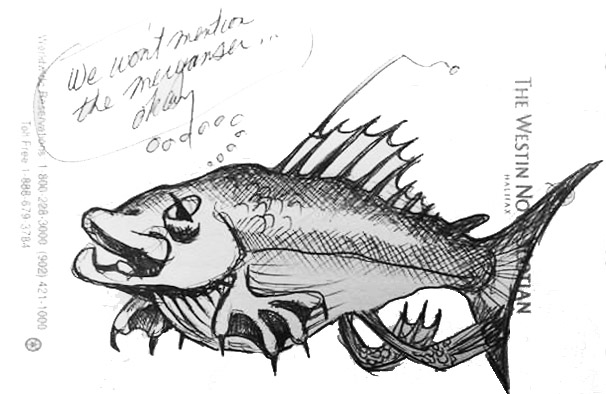
OPINION - Frankenfish coming to Bay of Fundy soon?


© Art MacKay

Atlantic salmon swim to forefront of science
By JOHN McPHEE Environment Reporter, Halifax Chronicle-Herald
Thu. Dec 10, 2010


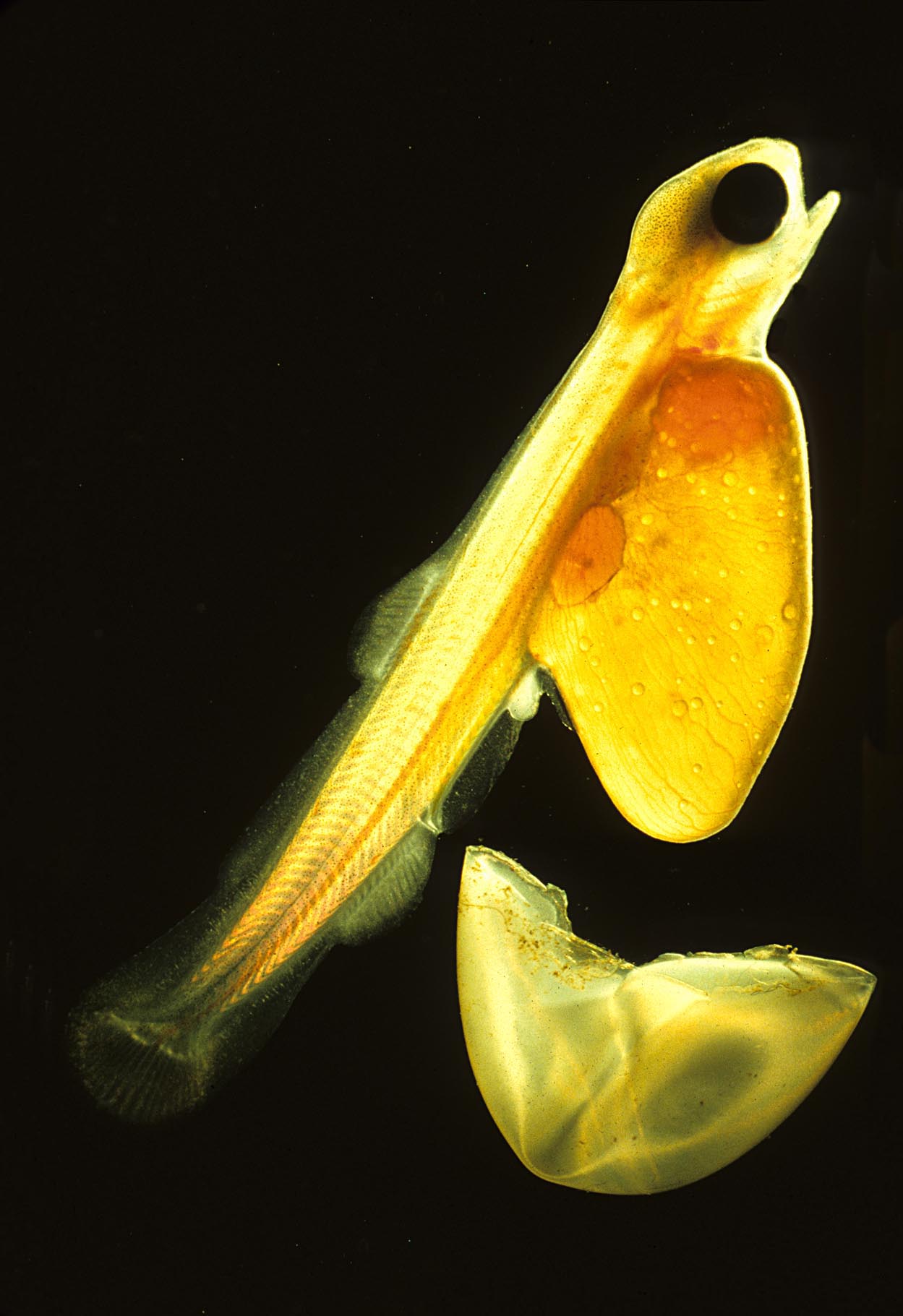
A genetically modified Atlantic salmon escapes from a fish farm into a river.

But it doesn’t live long enough to enjoy its freedom. Because the salmon isn’t eating a particular feed, a "kill gene" kicks in and it dies.

It may sound like science fiction but researchers are well on their way to this kind of genetic tweaking, said Fred Whoriskey, of the Atlantic Salmon Federation, in an interview Wednesday.

Genome mapping and research will eventually open up a wide array of biological tools. Most of them

Monday, October 22, 2018

AQUACULTURE: Lessons We Need to Learn from Ancient Aquaculture Technology

Sustainable Ancient Aquaculture – National Geographic Society (blogs)

Posted by Mark Spalding in Ocean Views on July 11, 2013. Written by: Mark J. Spalding, Kathryn Peyton and Ashley Milton


 Lessons We Can Learn from Ancient Aquaculture Technology
  1. Use plant-based feeds instead of wild fish;
  2. Use integrated polyculture practices such as IMTA;
  3. Reduce nitrogen and chemical pollution through multi-trophic aquaculture;
  4. Reduce escapes of farmed fish to the wild;
  5. Protect local habitats;
  6. Tighten regulations and increase transparency;
  7. Re-introduce time-honored shifting and rotating aquaculture/agriculture practices (Egyptian Model).

Phrases like “lessons from the past” or “learning from ancient history” are apt to make our eyes glaze over, and we flash to memories of boring history classes or droning TV documentaries.  But in the case of aquaculture, a little historical knowledge can be both entertaining and enlightening.
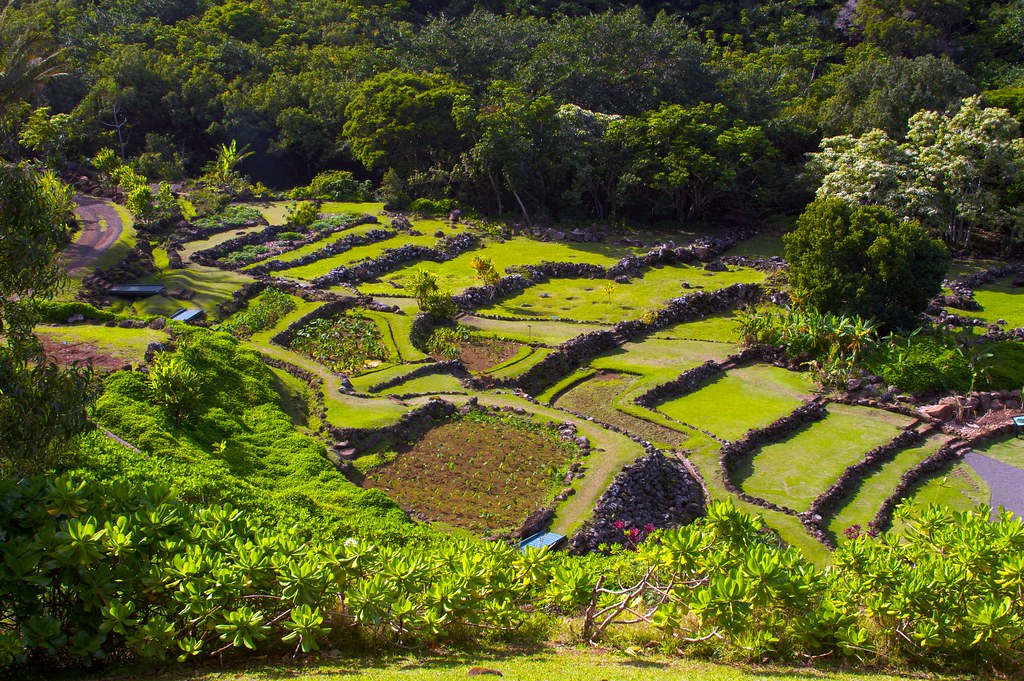
Fish farming is not new; it has been practiced for centuries in many cultures.  Ancient Chinese societies fed silkworm feces and nymphs to carp raised in ponds on silkworm farms, Egyptians farmed tilapia as part of their elaborate irrigation technology, and Hawaiians were able to farm a multitude of species such as milkfish, mullet, prawns, and crab. Archaeologists have also found evidence for aquaculture in Mayan society and in the traditions of some North American native communities.
The award for oldest records about fish farming goes to China, where we know it was happening as early as 3500 BCE, and by 1400 BCE we can find records of criminal prosecutions of fish thieves.  In 475 BCE, a self-taught fish entrepreneur (and government bureaucrat) named Fan-Li wrote the first known textbook on fish farming, including coverage of pond construction, broodstock selection and pond maintenance. Given their long experience with aquaculture, it’s no surprise that China continues to be, by far, the

Monday, August 29, 2011

AQUACULTURE - Inka Milewski on Aquaculture and the Blue Revolution


Blue Revolution Revisited

by Inka Milewski
Heather Issac and vying for first followed by Dawn Marie at Friendship. There were a lot of big boats doing some fast dancing at the races this season. Winter harbor attracted boats and a crowd. Good racing prizes and the annual lobster festival helped. ©Photo by Sam Murfitt
It’s not clear when the term ‘Blue Revolution’ was coined to describe the industrialization of aquaculture. By the late 1990s, in the wake of declining wild fish stocks, policy analysts, scientists, economists and government agencies around the world began touting the Blue Revolution as the “next frontier for humankind’s food.” Traditional fisheries were being described as “Stone Age” and their technology as primitive as those of “hunter-gatherer” societies.
While hailed as the world’s next major source of protein, farmed fish represents a very small portion (6 percent) of per capita global protein consumption. According to the most recent data from the UN Food and Agriculture Organization, plants and animals still represent about 80 percent of the primary source of protein for most of the world’s population. Globally aquaculture is dominated (89.1 percent) by seaweeds, crustaceans and freshwater fish production. Farmed salmon represents only 2.8 percent of global aquaculture production. 

Thanks to Joyce M.
Get the pictures and subscribe at: http://fundytides.blogspot.com
Enhanced by Zemanta

Sunday, March 13, 2011

ECONOMICS: It's the environment Stupid!


How to get it through their stupid heads. The environment IS economics! The battle over LNG in the International Quoddy Region would see the loss of thousands of jobs based on the environment with UNDER 100 jobs being created and the loss of over a quarter of a billion dollars in annual income with virtually no dollars staying in the region. Not to mention that the environment is the foundation of all life including us. Stupid or what!

Art

*********************

Letters to the editor March 12, 2011

Posted March 11, 2011, at 8:33 p.m.

Investment delayed

I was shocked and saddened to read of Gov. LePage’s proposal to zone three million acres of Maine’s irreplaceable North Woods for development. My family has vacationed in the state since the 1930s and owned property here for most of this time.  As a result of the governor’s actions, we have unfortunately placed our future plans on hold, including a major new investment in the state.

These are difficult economic times, but this is exactly the wrong approach to solving them. Maine has one defining characteristic that sets it apart from most of the East Coast — its quality of life. This is the Maine “brand” that supports a $10 billion tourism industry and is a major draw for new businesses. How can a proposal that  detracts from the current economic base, hurts our ability to attract progressive growth businesses (and their high paying jobs), and permanently destroys the very definition of Maine be a step forward? Are strip malls and condos the vision we all share for Maine’s future? I think not.


Get the pictures and subscribe at: http://fundytides.blogspot.com

Saturday, February 26, 2011

AQUACULTURE: Farmed salmon harvest hits decade high in Maine

By Clarke Canfield
Associated Press / February 26, 2011

PORTLAND, Maine—Maine salmon farmers had their most abundant harvest in a decade in 2010, marking the continued rebound of the state's finfish aquaculture industry.

More than 24.5 million pounds of salmon valued at $76.8 million were harvested from pens in ocean waters off eastern Maine, making it the second most-valuable seafood in the state behind lobster, according to the Department of Marine Resources. It was the highest output since 2001 and is nearly triple the harvest of four years ago, when Maine's salmon farming industry was reeling.

Friday, January 14, 2011

AQUACULTURE: Opposition to Genetically Modified Salmon on PEI

Unless you are blessed with god-like prescience, this is truly something to be worried about. Additionally, this industry has a long history of poor judgement on salmon diseases, vaccination potential, stocking density and more. GMO "accidents" will go beyond remediation. Perhaps efforts should go to increasing profits by decreasing mortalities?

My opinion this morning. Art
Atlantic Salmon, Salmo salar, Taken thru glas,...Image via Wikipedia***********

GMO salmon opponents meet with Ghiz
Last Updated: Thursday, January 13, 2011 | 5:52 PM AT
CBC News


A P.E.I. coalition against genetically modified salmon says Premier Robert Ghiz has agreed to pursue more transparency around export plans by AquaBounty.

The U.S.-based biotechnology company has an egg-hatching facility in Bay Fortune where it's developing advanced-hybrid salmon designed to grow faster than traditional fish. The company touts its AquAdvantage Salmon as reaching market size twice as fast as traditional salmon.

AquaBounty is currently awaiting a decision from the U.S. Food and Drug Administration on whether its fish can be sold in the American market. If approved, the fast-growing salmon would be the first genetically modified food animal for sale in the world.

The coalition of opponents to the company's plans met with Ghiz and provincial Environment Minister Richard Brown Thursday. The group, which includes the Council of Canadians, P.E.I. Health Coalition, the Canadian Biotechnology Action Network and Earth Action PEI, has been asking Ghiz to address what it says is growing opposition to AquaBounty's development of GMO salmon in P.E.I.

Leo Broderick, vice-chair of the Council of Canadians, said the group wants public consultations on the AquaBounty export plan.

"We did get a commitment from the premier that he would play a more active, positive role in trying to get Environment Canada to be more transparent," said Broderick. "And so, he is going to write Environment Canada asking whether or not Aqua Bounty has requested approval for commercial production of GMO Atlantic salmon, salmon eggs on P.E.I. And he's going to ask that the P.E.I. government be part of the environmental risk study. That's very good."

Broderick said the Premier agreed to take the group's demands for a consultation process to the Liberal Caucus, but he ultimately refused a request to declare P.E.I. a GMO-free province.

Read more: http://www.cbc.ca/canada/prince-edward-island/story/2011/01/13/pei-aqua-bounty-transparency.html?ref=rss#ixzz1B0iUbakF

Get the pictures and subscribe at: http://fundytides.blogspot.com
Enhanced by Zemanta

Tuesday, January 11, 2011

AQUACULTURE - The truth is what we choose to believe. Are escaped Atlantic salmon really a threat to the wild salmon in Fundy?

Copyright Art MacKay
Well,  here is another business tragedy being turned into a gloom and doom story as the Atlantic Salmon Federation and others keep beating the drum that mixing stocks will damage the wild runs of salmon. I've been in the business since the inception of salmon farming in Fundy. In fact, the very first experimental farm was located at my facility in Deer Island and I started the first commercial operations there and at Eastport. Before that I carried out research along the coast of Fundy for over 20 years and what I saw suggests they are missing (or worse ignoring) the real causes. 

In the beginning,  ASF was all for aquaculture as a way to "save" the Atlantic salmon on the east coast. In fact they provided the very first smolts that went into the experimental cages at Deer Island. The concern then was they were "inferior" fighters on a rod and reel and they didn't "taste right". The first myth was dispelled when Wilf Carter was invited to angle in one of our cages. The myth of a "poor fighter" went down the drain that day. As for the flavour, we did some "blind" tests using Newfoundland salmon. I'll leave it to you to guess the results. Like the current situation, the truth is what we choose to believe.

I have yet to see convincing evidence that interbreeding between aquaculture and "wild" fish produces any detrimental results. I have read the report which is the foundation of this belief and, frankly, it is more opinion than science. One wonders if the researchers are pushing this current position because it produces research monies. 

Back in the sixties and seventies it was clear cutting in the inner Bay of Fundy that was destroying salmon spawning areas, industrial pollution,  budworm spray and agricultural chemicals that were the concern. This was followed by increasing pollution from shoreside domestic treatment facilities as well as major new types of concern such as elevated salinity from the brine line serving the potash mines in Sussex.

Now the aquaculture business is not "without sin". But it is not the source of all the woes of those that push half truths on behalf of the salmon anglers. They would be well advised to count the loss of salmon by aquaculture sites as a blessing for the angler. Perhaps some "hybrid vigour" is just what these long-since mixed-breed, so-called, "wild" salmon need?

My thoughts this morning
Art

************************
Thousands of farmed salmon escape from cages Published Tuesday January 11th, 2011 

Derwin Gowan
Telegraph-Journal

ST. ANDREWS - Nets torn during heavy winds around Christmas allowed 138,000 small farmed salmon to escape from two floating sea cages off Grand Manan.

These escapees threaten wild Atlantic salmon with parasites and disease and by mixing genes with the native fish, Atlantic Salmon Federation (ASF) president Bill Taylor said in an interview.

The wind prevented Admiral Fish Farms Ltd. from recapturing any of the escaped fish, company president Glen Brown said in a written statement.

However these fish, each less than 200 grams (seven ounces), would not likely survive in the wild, he said in the statement.

Taylor did not seem so sure that all of these 25-centimetre salmon, between the smolt state and adult stage, would die before causing trouble for the wild fish.

"When they do become sexually mature next fall, they will by instinct begin to search out rivers and run up rivers to spawn, and when they do that they will be spawning with wild salmon," Taylor said. "The progeny of hybrid aquaculture-wild salmon, they're survival is greatly reduced."

"The breach occurred on two new cages located south of Pumpkin Island, Grand Manan, when a vertical rope and chain came in contact with nets for an extended period of time during high winds," Admiral Fish Farms said in its statement.

Workers first noticed the breach Dec. 26 but high winds prevented them from confirming the loss till Dec. 30, the company stated.

To prevent future breaches the company does not intend to put fish back into this type of cage until design issues are resolved, according to the statement.

"Fish containment is a top priority with our company and we take any breaches very seriously," Brown said in the statement.

The company reported the escape as required by provincial regulation, Taylor acknowledged.

However, the ASF would move salmon farms to "closed containment" on land to prevent escapes as well as spread of sea lice and disease between the aquacultured and wild fish.

Monday, December 27, 2010

AQUACULTURE - Is the book 'The Salmon Connection" available?

Dr. John M. Anderson's book, The Salmon Connection is the definitive source of information on the history of Atlantic salmon aquaculture in the Bay of Fundy and northern Gulf of Maine. Anyone know who is selling it?
Get the pictures and subscribe at: http://fundytides.blogspot.com
#aquaculture

Tuesday, November 2, 2010

AQUACULTURE: Salmon farmers temporarily allowed use of pesticide

Get the pictures and subscribe at: http://fundytides.blogspot.com


Fishermen complain that deltamethrin not only kills sea lice, but lobsters and other crustaceans. (Photo: Alexandra Morton)
CANADA 
Monday, October 25, 2010, 02:00 (GMT + 9)

New Brunswick (NB) has obtained permission from Health Canada’s Pest Management Regulatory Agency for fishers to use a restricted pesticide against sea lice in Atlantic salmon farms as an emergency use between 15 October and 31 December 2010.

The main chemical ingredient of the pesticide Alphamax is deltamethrin, which some worry will kill lobsters and other crustaceans in addition to the sea lice. Lobster fishers were therefore dismayed by Health Canada’s decision.

The farmed salmon industry intends to begin the use of Alphamax in the Bay of Fundy this week on farmed fish infested by sea lice.

Health Canada said Alphamax treatments can be used only on tarped cages or contained areas also known as well boats. The salmon is placed in the boats before being bathed in a concentration of Alphamax and then transferred back to the cages with the bath water.

The industry ideally wishes to be allowed to apply a rotation of pesticides so the sea lice do not get a chance to become tolerant to any of the particular chemicals, said Nell Halse of the Atlantic Canada Fish Farmers Association, reports CBC News.


"That whole process, from our farmers' point of view, takes too long," she explained. "We needed these treatments, a whole suite of them, in the spring when sea lice first started showing up on our farms.”

"If we'd had three to four different treatments that we could rotate around to deal with the different stages of sea lice, we would've been in good shape last spring," she added.

But the industry has been having a difficult time trying to contain an especially burdensome sea lice infestation due to the high ocean temperatures in the summer. Health Canada’s approval of the use of Alphamax in the farms followed an extended risk assessment, Halse told.

Meanwhile, the Traditional Fisheries Coalition made a verbal request to the federal organisation to suspend the use of chemicals in the Bay of Fundy, reports The Telegraph-Journal.

"All treatments need to stop given that the lobster are at a very critical point and that the juveniles in the water are everywhere ... this isn't acceptable," said Melanie Sonnenberg, project manager of the Grand Manan Fishermen's Association, which belongs to the Coalition.

Further, Matthew Abbott, a member of the Fundy Baykeeper Project, believes the industry is to blame for its sea lice troubles because they are linked to the long-term use of pesticides in the farms. Consequently, implementing more chemicals is counterproductive.

"I think it goes to show that the problem isn't being solved," he said. "Instead of funding sustainable practices that don't lead to these massive sea lice outbreaks, they just keep adding new chemicals."

By Natalia Real
editorial@fis.com
www.fis.com

Friday, October 1, 2010

AQUACULTURE: Aquaculture company denies using harmful pesticide

Get the pictures and subscribe at: http://fundytides.blogspot.com
Image Credit: wikipedia.com


Investigation: Environment Canada probing discovery of illegal substance in Bay of Fundy

Derwin Gowan
Telegraph-Journal

ST. STEPHEN - Northern Harvest Sea Farms does not use the pesticide cypermethrin, company chief executive officer Larry Ingalls said in a news release Thursday.

On Sept. 23, Environment Canada issued "inspectors directions" telling Northern Harvest and Ocean Legacy Inc. to cease using cypermethrin, and prevent its use in the future, in floating salmon cages in the Bay of Fundy off Charlotte County.

The department based these orders on results of samples taken in the spring that show cypermethrin was present in salmon cages belonging to the two companies, said Robert Robichaud in Moncton, operations manager for the department's enforcement branch in New Brunswick and Prince Edward Island.

The test results showed "detectable" levels of this chemical licenced for agricultural use, but not for a marine environment in Canada, Robichaud said.

The department took the samples from May through July as part of a program of routine inspections of aquaculture sites that began this spring, Robichaud said.

The two companies must "immediately stop any use of cypermethrin and prevent any future use of cypermethrin," Robichaud said. The companies could be fined up to $200,000 for not complying.

The investigation continues into who put the cypermethrin, commonly used to kill potato bugs and on blueberries, in the water.

The probe could lead to criminal charges.

Environment Canada's laboratory in Moncton identified cypermetrhin on dead lobster in the Bay of Fundy last fall.

On Nov. 19 the Grand Manan Fishermen's Association reported dead lobster in traps. More were found Nov. 23 in Pocologan, and off Deer Island Dec. 3.

On Sept. 8 this year, a fisherman reported a number of dead lobsters off Campobello Island. The laboratory has yet to identify any chemicals on these lobsters.

Canada does not licence cypermethrin for use in water, but the substance does kill sea lice, a bane to salmon farmers.

Traditional fisheries favour banning all chemicals from the bay, controlling sea lice by reducing the number of salmon in sea cages, Fundy North Fishermen's Association executive director Maria Recchia said in an interview.

The industry should raise fish in tanks on land, John Werring with the David Suzuki Foundation said from Vancover.

"This is just all part of an ongoing investigation," said Pamela Parker, executive director of the New Brunswick Salmon Growers' Association. "We shouldn't draw conclusions until the investigation reaches its end point."

"Northern Harvest Sea Farms has not, is not and will not use cypermethrin. The use of this, or any other unauthorized products is strictly against the company and owner's policy," Ingalls said in his written statement.

The company will co-operate with Environment Canada's investigation, he said.

Environment Canada found "positive results at very low levels in May" at two sites, Ingalls said.

"Ongoing tests at these sites have resulted in negative readings. All other farms tested had negative results, including recent testing at three farms in Campobello.

"Because of the seriousness of this issue, Northern Harvest immediately contracted an independent laboratory analysis of the sites in question among others. All those results have been negative," he said.

Northern Harvest will say no more while the investigation continues, he said.

Ocean Legacy did not return calls.
Wednesday, September 29, 2010

AQUACULTURE: Illegal pesticide use probed in 4 N.B. aquaculture sites

Last Updated: Wednesday, September 29, 2010 CBC News

Environment Canada has launched four active investigations into the alleged illegal use of the pesticide Cypermethrin in the Bay of Fundy.

Last fall, federal government investigators found the chemical cypermethrin present in weak and dying lobsters in the Bay of Fundy.

Now, further inspections done over the past few months have turned up detectable levels of cypermethrin at two other aquaculture sites in southwest New Brunswick.

The chemical is illegal for marine use in Canada, but it's used in other countries to combat sea lice.
'We know it's toxic to all crustaceans and that's a problem not only for our fisheries but for the environment.'— Maria Recchia, Fundy North Fishermen's Association

The initial discovery of lobster kills in the Grand Manan and Deer Island areas late last year launched two investigations that are still ongoing.

Ever since, Environment Canada officials have been monitoring the Bay of Fundy through routine inspections and sample collections.

Between May and July, they found levels of cypermethrin in certain fish farms in Charlotte Country, which led to two new investigations into its alleged use.

Robert Robichaud, a district manager with the department's environmental enforcement branch, said government officials have issued a legal document known as "inspector's directions" to the two companies that own the affected sites.

"Those directions are quite specific by nature. And what they require is the immediate cease to use any illegal chemicals — in this case cypermethrin — and to prevent it from being used in the future," Robichaud said.

The companies are Northern Harvest Sea Farms and Ocean Legacy, both are based in L'Etang, N.B.

Neither company returned calls for an interview.

Concerns raised

Maria Recchia, an official with the Fundy North Fishermen's Association, said she's concerned by the latest results.

"We know it's toxic to all crustaceans and that's a problem not only for our fisheries but for the environment," Recchia said.

No charges have been laid to date and the investigations continue. Robichaud said a violation of the inspector's directions can result in a $200,000 fine.

This isn't the first time the pesticide has been found in the Bay of Fundy. In 1996, about 50,000 lobsters were found dead in a pound near St. George. Tests revealed they were exposed to cypermethrin.

Many people at the time blamed the aquaculture industries in the area for the pesticide getting into the water.

Read more: http://www.cbc.ca/canada/new-brunswick/story/2010/09/29/nb-lobster-fundy-cypermethrin-557.html?ref=rss#ixzz10vEkN05u

More about Cypermethrin: http://en.wikipedia.org/wiki/Cypermethrin

Friday, March 5, 2010

AQUACULTURE - How do you count fish inventory that goes round and round and .....

Get the pictures and subscribe at: http://fundytides.blogspot.com

New tech company counting on fish

By REBECCA GOLDFINE
From BangorBiz
http://cl.exct.net/?ju=fe2a16737164037f711279&ls=fdfd10737d6d0d7d75157075&m=fef217777c6703&l=fe9513737564027474&s=fdf415727d66037e711d7476&jb=ffcf14&t=

Two young entrepreneurs with an eclectic background in laser technology, marine engineering and sediment analysis have won a couple of startup grants to devise a new tool to help fish farmers.

The Maine Technology Institute recently awarded Holden-based AXAT Inc., which stands for algorithm experts for advanced technology, with a $12,500 seed grant. That money followed a $5,000 grant the institute awarded the company last fall. AXAT co-owner Cody Andrews says the money has been used in part to put together a laser system that he says can count and measure fish species in aquaculture hatcheries, as well as assess the health of the fish.

Andrews, 23, will graduate from Maine Maritime Academy in Castine this spring with a five-year degree in marine systems engineering. His business partner, 25-year-old Valérie Robitaille, another Maine Maritime Academy graduate, is working on her doctorate in geo-engineering. She specializes in sediment analysis and shoreline erosion. "She actually uses lasers to measure particle displacement," Andrews says.

Joe Migliaccio, MTI's spokesman, says the institute was impressed with the budding company because it represents a hybrid of two economic sectors with potential in Maine: aquaculture and remote sensing technology. He added the company's professional collaboration with The Center for Cooperative Aquaculture Research in Franklin provided another incentive to support it. Nick Brown, the center's director, says the system has not been deployed, but that he's seen some promising tests.

Andrews says Brown has taught him and Robitaille a lot about fish farming. "You really have to know what you're doing," Andrews says. "You have to monitor the water quality, the food, how the fish are growing; it's a finesse-type thing."

AXAT's sensing lasers are mounted above water, aiming down at the depths below - whether it's the open sea or a fish tank. They detect and count objects in the water, as well as determine the concentration of live and inert food present for the fish. "We can tell if the fish are malnourished or if they are overfed," Andrews explains.

The lasers can also record the activity of the fish and their pigmentation, which can change if the fish are diseased with parasites, such as sea lice. Over time, the collected data is meant to draw a picture of the fish's life.

"We can measure their growth rates," Andrews says. "It sounds a little bit far-fetched for people, but we have done quite a few experiments."

Robitaille, the technical director of AXAT, writes in an e-mail that she and Andrews will turn their "unique algorithm development process" into a user-friendly interface that can be easily mastered by most people.

MTI's seed grants are designed to help startup science and technology companies in Maine commercialize their products. Andrews says AXAT's laser system is at least 16 months away from commercialization. It now costs roughly $4,000, but he anticipates the price will drop as more fine tuning takes place.

The point of the unit, he says, is to help new fish farmers break into the business.

"What the United States is lacking is a really robust aquaculture industry," he says. "If we could make the whole system easier and we could make it more precise, we could limit how much expertise you need. You don't need to have a PhD to raise fish."


Photo Credit: wikipedia.com

Wednesday, August 5, 2009

AQUACULTURE - New Brunswick sea lice pesticide treatment generates opposition

 by Larry Lack. See the entire article at The Working Waterfront

Controversy about deltamethrin and the way the fish will be dosed with it in this summer's experiment heated up shortly after June 8 when Cooke Aquaculture (which owns the most of the cage sites that will be treated with the insecticide) announced that it has received "Certified Quality Salmon Eco-Certification" from Seafood Trust for the salmon that its True North marketing division sells in Canada. Seafood Trust uses International Food Quality Certification (IFQC) standards to assess companies that apply for its certification.

Environmentalists, consumers and fishermen have raised questions about how Cooke's salmon can meet IFQC's key standard which requires "maintenance of a pristine quality marine environment" if its salmon and the bays in which they are raised are dosed with deltamethrin.

Dale Mitchell of Deer Island fishes lobster and scallops, operates herring weirs and serves on the board of directors of the Fundy North Fisherman's Association as well as that of the Fundy Weir Fishermen Association. "A lot of us who fish," Mitchell says, "just don't think the aquaculture industry should be using these chemicals in the water where we're fishing. We don't necessarily believe they're safe, and even if they are, we don't think the aquaculture people can be trusted to use them safely."

Reid Brown of Deer Island, who also serves on the Fundy Weir Fishermen Association board, says he is "very concerned about this experiment. We can't understand why they have to do this in so many cages. Well, we do, really - it's because they have the lice getting out of control in those cages, but they don't want people to know too much about that."

Dr. Vladimir Zitko, a chemist and former head of toxicology at the Fisheries and Oceans Canada biological station in St. Andrews, New Brunswick, now retired, is concerned about the planned release of deltamethrin into marine waters. "Deltamethrin is a very toxic insecticide," Zitko says, "very similar to cypermethrin, the chemical that killed the lobsters in Back Bay in 1996. It's extremely toxic to aquatic animals and I'd be very hesitant to use it this way in the ocean. It's strongly acid and I think it should at least be treated with something alkaline to help neutralize it and then disposed of in a toxic waste facility."

Get the pictures and subscribe at: http://fundytides.blogspot.com
Photo Credit: NWNature.net

Saturday, May 23, 2009

Financial Post - Multiply the fish


The vast amount of coastline and lakes in Canada makes it perfect for fish farming

Alia McMullen, Financial Post

Published: 5/19/2009 12:00:00 AM

It may be a -50C day up in Whitehorse, but that won't stop Icy Waters Ltd. from drilling through the ice of their land-based fish farm to deliver fresh Arctic char to a restaurant near you.Painting Credit: Arctic Char, Art MacKay

Wednesday, January 7, 2009

AQUACULTURE - Bay of Fundy Needs EIA's Before Aquaculture Beaches are Designated

I've had several calls and emails about the announcement that the NB Department of Natural Resources will be creating "aquaculture beach sites" where the industry can haul their cages, boats, barges, and other infrastructure ashore to repair and maintain them. Having started the very first commercial aquaculture sites at Deer Island and Eastport and having been surveying the impact of the industry on the Quoddy ecosystem for almost 30 years, it is certain that these sites will have impacts where they are established and, undoubtedly, will be eye-sores. While the provided map is less than useful, I have been given the names of a couple of these beaches that have unique and important populations of marine invertebrates and have been traditional community beaches for decades and decades.

The timing on this makes it appear that Nature Resources has designed the notice to fast-track the result without proper consideration and public input. While we give lipservice to the value of Quoddy and fight unsuitable development like Pittston, LNG, coastal quarries, municipal pollution and all of those developments that threaten the important and financially valuable Quoddy ecosystem, certain existing government departments seem to be willing to ignore our own regulations and laws. Also we are spending thousands on developing a marine planning approach under Sue Farhquarson`s able leadership. Unfortunately this is not `planning` where the needs of all resource users are taken into account, compromises are made, and the best solutions are sought.

Assigning beaches without public consultation is a travesty. In fact, the delicate nature of some of these beaches screams for Environmental Impact Assessments. Again, no one argues against the need ... it is the arbitrary selection of location and lack of public consultation that rankles.

Come on folks, let's do it right!

At the moment, that's my opinion. What`s yours.