Showing posts with label Maine. Show all posts

Tuesday, October 3, 2023

LOOKING BACK - Maine politicians move from ridiculous to downright dangerous!

WHAT'S HAPPENING NOW IN 2023???
xxxxxxxxxxxxxxxxxxxxxxxxxxxxxxx

From Maine Organic Farmers and Gardeners Association

Beware Of Two Bills That Seek To Roll Back Your Right To Know About Pesticide Spraying In Your Neighborhood

LD 16 - An Act To Revise Notification Requirements for Pesticides Applications Using Aircraft or Air-carrier Equipment. This bill would reduce the aerial spray notification distance from 1,320 feet to 100 feet, and reduce the air-carrier spray notification distance into crowns of fruit trees or Christmas trees from 500 feet to 50 feet. MOFGA opposes this bill.

LD 228 - An Act To Revise Notification Requirements for Pesticide Application. This bill seeks to repeal the notification registry entirely. MOFGA opposes this bill.


Thursday, March 16, 2017

EXPLORE: Planning a trip? Don't miss our Downeast lighthouses online guide

Planning a trip?

Here's most of the lighthouses from Massachusetts to Newfoundland courtesy of Google My Maps and the many contributors to this effort. Enlarge the map and click on each for more details about individual lighthouses. 


Need this information on the road?


Download Google's "My Map" app on your phone or tablet and search for "Downeast Lighthouses". Presto, you can access all of this information. Click through to the weblink where you will find detailed information about most lighthouses.

Friday, May 31, 2013

LNG - St. Andrews-by-the-sea continues to oppose LNG development in Passamaquoddy Bay.

English: The Algonquin hotel, St. Andrews, New...
English: The Algonquin hotel, St. Andrews, New Brunswick, Canada. (Photo credit: Wikipedia)
May 15, 2013
Kimberly D. Bose, Secretary
Federal Regulatory Commission
888 First Street NE Room 1A
Washington, DC 20426

Dear Ms. Bose:
Re: Downcast LNG CP07-52-000. CP07-53-000. CP07-53-001

The Council of the Town of Saint Andrews, New Brunswick would like to submit this letter to reiterate our concerns and opposition to the establishment of a Liquefied Natural Gas plant as proposed by Down East LNG at Robbinston, Maine.

Figure 25 of the Marine Transit Route M50, international breech scenario, clearly
indicates that much of the Town of Saint Andrews would be affected, should a natural
gas spill or fire occur. None of our emergency planning has included such a scenario.
The medical, fire and policing services required to properly address the explosion risk is
beyond Town financial capacities.

Since our last submissions to your agency in 2009, significant financial resources have
been made to our tourism and infrastructure. To accommodate our developing cruise
ship initiatives, $900,000 (CAD) was invested in the Town Market Wharf. We had two
large cruise ships and several smaller ships use the wharf in 2012 and expect that this
initiative will be successful in the continuing years. The exclusion zones and transit
schedules proposed by the LNG traffic would affect our cruise ship plans. The Town
wharf also supports a multimillion dollar aquaculture industry. Again exclusion zones
and transit schedules would impact that industry. Our signature hotel, the Algonquin is
nearing a $30,000,000 renovation in a joint venture by Marriott Hotels, New Castle
Properties and the Province of New Brunswick. The hotel is the cornerstone of Saint
Andrews tourism and is establishing a worldwide marketing program through the
Marriott Hotel Autograph designation. The development of the Downcast LNG is seen
as a significant roadblock to the viability of the Algonquin Hotel initiative and the
negative economic impacts of the LNG terminal to the hotel is seen as dramatic.

It is impossible to market a vacation in an identified risk zone. The Huntsman Marine
Science Centre has just completed a $4,000,000 construction of a world class marine
aquarium. It sits exactly opposite the proposed site for the Downcast Project and in the
high risk international breach scenario. The iinpacts to its viability are as significant as
those of the Algonquin Hotel.

[With] all of the current usage of the bay, it is impossible to add the proposed tanker
traffic and carry on with the vital economic activity of this area. No scheduling can solve
this problem; many users have to use the waterway when the conditions are appropriate
for their needs.

The government of New Brunswick and the State of Maine have worked together on the
"Two Nation Vacation" marketing initiatives in the last several years. This collaboration
works to stimulate tourism on both sides of the border. The Downcast LNG facility is
seen as a threat to this tourism strategy.

We wish to bring these new investments to our tourism and infrastructure facilities to
your attention. The Council of the Town of Saint Andrews continues to strongly oppose
the development of an LNG terminal in Robbinston, Maine. The Downeast LNG project
would put the viability of our tourism and commercial economy at risk.

Stan Choptiany
Mayor, Town of Saint Andrews


Friday, March 29, 2013

BREAKING NEWS: An important step forward in restoring alewives to the St. Croix river & More...


English: Smallmouth bass (Micropterus dolomieu...
English: Smallmouth bass (Micropterus dolomieu) Français : Achigan à petite bouche (Micropterus dolomieu) (Photo credit: Wikipedia)
Posted: 27 Mar 2013 11:21 AM PDT
An important step forward for restoring alewives to the St. Croix river
Fishermen, environmentalists, anglers, representatives from the Passamaquoddy tribal government, federal agencies and the Canadian government have spoken: Alewives should be allowed to return to their native St. Croix river.
At a legislative hearing Monday, speaker after speaker rose in support of a bill, L.D. 72, that would immediately open many fishways at the river's dams to Alewives.
Our own Sean Mahoney, EVP & Director, CLF ME, testified in support of the bill, arguing, "L.D. 72 is simple, it does the right thing and its benefits – to the watershed, the ecosystem and the many whose livelihoods would be enhanced by a return of the alewives – would be relatively immediate."
The legislature is currently considering three bills, and Mahoney was joined by the vast majority in supporting L.D. 72, an emergency bill sponsored by Passamaquoddy tribal Rep. Madonnah Soctomah, that would require the Grand Falls Dam fishway to be opened to the "unconstrained passage" of Alewives by May 1st, before the species' spring spawning season.
The opening would give the fish immediate access to over 24,000 acres of habitat, compared to a sparse 1,174 open today. In all likelihood, this opening would lead to Canada's opening the fishway upstream at the Vanceboro dam, allowing access to thousands of additional acres. One researcher estimated that if spawning runs had access to the entire watershed, alewives could number more than 20 million, up from just over 31,000 now.
The alternative Adaptive Management Plan, L.D. 584, calls for a more gradual, staged reintroduction of spawning Alewives to the river. Proposed by Governor Page's administration, this plan met overwhelming opposition at Monday's hearing, and was even condemned by one of its own co-authors. It falls far short of restoring alewives throughout the watershed.  It also would run afoul of federal law concerning the operating of dams such as the Vanceboro Dam, as well as the State's own water quality standards, as noted by Sean in his testimony.
The LePage administration, along with fishing guides from Washington county, were alone in their concerns that reintroduction of Alewives may lead to a decline in smallmouth bass. The National Marine Fisheries Service and the U.S. Fish and Wildlife Service asserted that smallmouth bass, which were introduced into the St. Croix in 1877, have lived harmoniously with spawning Alewives in hundreds of Maine's lakes and rivers.  Mahoney's testimony, which you can read here, provides the legal arguments against L.D. 584.
You can more about our work restoring the alewives to Maine's rivers here, or check out our latest blog posts about alewives here.


Tuesday, February 12, 2013

Glasgow Steamer Hestia lost off Grand Manan - October 1909

Get the pictures and subscribe at: http://fundytides.blogspot.com

Hestia porthole. Art MacKay


Bay of Fundy, NB Steamer HESTIA Lost, Oct 1909 Posted April 21st, 2010 by Stu Beitler
From: Gendisasters

GLASGOW STEAMER LOST.

THIRTY-FOUR MEN DROWNED IN THE BAY OF FUNDY.

SUFFERINGS OF SIX SURVIVORS.

The Glasgow steamer Hestia was wrecked on Grand Manan Island, in the Bay of Fundy, New Brunswick, in a storm on Monday, and thirty-four of those on board were drowned, only six being saved. There were five passengers on board, all of whom appear to have been drowned.
The vessel, says a Reuter telegram from East Port, Maine, ran on to a shoal at Old Proprietor Ledge, her bows were impaled on a rock, and her after part, swinging free, was tossed high by the heavy seas. The captain had the boats lowered at the first shock, and as the vessel heeled over, and great waves swept her deck, the work was exceedingly difficult. In one of the boats four Scottish boys who were passengers were placed, with twelve of the crew. The boat, however, capsized, and all were drowned except two of the men. Still another boat was lowered, in which the captain took his place, with all the rest of the crew except six, who were left on board. When the gale abated in the afternoon the six men left on board were rescued by lifeboats. These, says a Lloyd's telegram, are the third officer (STEWART), the second engineer (MORGAN), and four seamen, KEEN (?Brian), McKENZIE, SMYTH, and McVICAR. The Hestia is a total wreck.

Three of the boats drifted ashore on Wednesday; two were empty, and the third contained four dead bodies.

38 Hours In The Rigging.
The third mate gives the following particulars:
The discovery of the ship's plight from the shore was delayed by thick weather. The survivors were lashed to the rigging for thirty-eight hours without either food or water, and when they were taken off by the lifeboat their condition was pitiable. Their sufferings were so terrible that it is feared that one of their number will not recover. After they had been in the rigging for twenty-four hours there were indications that caused them to fear that the mast would fall, and they therefore changed their position, working their way slowly and cautiously to the bridge, which was still out of water. It was, however, so exposed to the seas breaking over the vessel that they were obliged to return to the rigging.

Crew Of Clyde Men.
It is supposed that the vessel was misled by a wrong light, with the result that she was carried miles out of her course. She left Glasgow for St. John's, New Brunswick, on October 10th, with a crew of thirty-five, five passengers and a general cargo.

All the crew were shipped at Glasgow, and were chiefly Clyde men. The four Glasgow boys reported drowned were on their way to Canada in charge of horses with which to start farming.

The list of crew and passengers is as follows:
Captain H. M. NEWMAN.
First Officer T. McNAIR.
Second Officer JOHN McPHUN.
Third Officer S. STEWART.
Carpenter WILLIAM CALDWELL.
Boatswain ALEX DUNIGAN.
A.B.'s JAMES SMYTH, JOE SMYTH, B. BRIAN, A. MURRAY, C. McVICAR, D. GIBSON, JOHN McKENZIE, and WILLIAM CANDLESS.
Ordinary Seaman D. SINCLAIR.
Chief Engineer P. F. MUNN.
Second Engineer A. MORGAN.
Third Engineer H. SCOTT.
Fourth Engineer W. S. BEST.
Donkeyman HUGH SPIERS.
Storekeeper W. WARNOCK.
Firemen CHARLES DOEHERTY, P. HANNAH, JAMES RODGER, A. DUBRAN, A. MARTIN, and JOHN DONOCHIE.
Trimmers DANIEL CLARK, JOHN McFARLANE, DAVID McLEON, and JOHN O'NEIL.
Chief Steward A. McLEAN.
Second Steward A. GRAHAM.
Cook R. LAVERY.
Assistant Steward W. HART.
Passengers, JAMES WELSH, JAMES GALLOWAY and R. GALLOWAY (brothers), T. REID and D. COWAN.

The Hestia was a steel screw steamer of 2,434 tons, built in 1890. She belonged to the Donaldson Line of Glasgow.

Hackney Express Middlesex London 1909-10-30

Thursday, April 21, 2011

POLITICS: LePage wants to re-establish child labor.

LePage wants to re-establish child labour? Is there no end to this guy's darkness?


Get the pictures and subscribe at: http://fundytides.blogspot.com

Wednesday, April 13, 2011

EVENTS: Tiny Beards on Women Day may be cancelled in Maine.

Legislature OKs ban of BPA chemical

The state Legislature has passed a bill that would ban the chemical BPA from reusable food and beverage containers as of Jan. 1, 2012.
The Maine Senate yesterday voted 35-0 to phase out the use of the chemical, following the House of Representatives' vote of 145-3, according to a press release from the Environmental Health Strategy Center. The vote supports the Board of Environmental Protection's December proposal to ban BPA beginning next January, following the Legislature's 2008 approval of the Kid Safe Products Act, which established a process for the Department of Environmental Protection to ban the sale in Maine of certain products containing BPA and other harmful chemicals. However, Gov. Paul LePage singled out the proposal as part of his regulatory reform package and pushed for its repeal, arguing Maine should defer to federal regulations, according to the Bangor Daily News. In February, LePage amended LD 1 to remove that proposal.
The bill now goes to LePage for his signature. A veto of it would likely be overridden by a two-thirds majority vote by the Legislature, according to the Sun Journal.


Image Credit: http://naturescrusaders.wordpress.com
Get the pictures and subscribe at: http://fundytides.blogspot.com
Enhanced by Zemanta

Thursday, March 17, 2011

ENERGY: LePage administration still eyeing nuclear, despite Japan crisis

The Vermont Yankee Nuclear Power Plant.Image via WikipediaBy Kevin Miller, BDN Staff
Posted March 16, 2011, at 8:54 p.m.

AUGUSTA, Maine — Maine Gov. Paul LePage still regards nuclear power as a potential option for Maine’s future energy mix despite the unfolding crisis in Japan, according to his spokesman.

“What is happening in Japan is tragic,” Dan Demeritt, the governor’s communications director, said Wednesday. “But we are not changing our position that we need to consider all energy options going forward.”

Meanwhile, officials with the decommissioned Maine Yankee nuclear power plant, say the events taking place in Japan could not happen at the Wiscasset site due to differences between an operating plant and a non-working facility.

“It’s just not comparable,” said Maine Yankee spokesman Eric Howes.

Not long ago, nuclear was part of Maine’s energy mix, and LePage has said that he supports keeping nuclear power on the table as Maine seeks to reduce energy costs and reduce reliance on fossil fuels.

Demeritt said Wednesday the governor continues to support exploring “any option that would safely reduce the costs for Maine businesses and families” as the state seeks a broader energy mix.

That said, Demeritt said, to his knowledge, the administration is “not having those conversations at this point” with any potential developers.

The situation in Japan appears to be cooling the appetite for nuclear energy elsewhere in New England and across the country, however. In Vermont, the trouble-plagued Vermont Yankee nuclear plant likely faces even more opposition in the legislature to its request for a 20-year license extension after the nuclear disaster in Japan.

“I don’t think they had a pulse last week, but we’ve picked out the casket now,” Rep. Tony Klein, chairman of the Vermont House committee that oversees Vermont Yankee, said of the plant’s political prospects in the state.

When Maine Yankee was operating in Wiscasset, it generated nearly 120 billion kilowatts of electricity between 1972 and 1996. The plant was shut down and gradually dismantled beginning in 1997.

Today, all that is left of the Maine Yankee plant on Bailey Point is 64 “dry cask canisters” that hold the spent nuclear fuel rods and other radioactive materials. Those dry canisters are different from the spent fuel pools formerly used in Wiscasset and still used at the Japanese plants facing potential meltdowns, Howes said

The spent fuel in Wiscasset is encapsulated in thick, sealed stainless steel canisters which are then encased in a 2 ½-inch thick steel liner plus 28-inch thick concrete cylinders reinforced with steel.

Howes did not have specific numbers handy on Wednesday but said that, as part of Maine Yankee’s safety permit with the Nuclear Regulatory Commission, the facility was designed to withstand an earthquake bigger than the largest recorded ever for that region. Maine Yankee’s fuel storage facility is also designed to withstand tornadoes and hurricanes of historic proportions for that area, he said.

In fact, the 300,000-pound concrete canisters are designed so that even if they toppled over they would stay sealed, he said.

Additionally, unlike at an operating nuclear plant, there are no high-pressure pipes or other mechanical systems that would propel radiation into the atmosphere if there was a leak.

As a result, the “emergency planning zone” or exclusion zone is restricted to the 300-meter site around the storage facility, whereas during Maine Yankee’s operating days the zone surrounded the plant for 10 miles.

Instead, the storage canisters use a passive system of air to cool the rods.

“It’s a passive system that doesn’t require any electricity or pumps,” Howes said. The facility is nonetheless monitored around the clock.

The federal government was supposed to remove the spent fuel from Wiscasset and other plants across the country. But that never happened amid the political battles over where to site a large storage facility. As a result, Maine Yankee and ratepayers pick up the estimated $6 million to $8 million annual tab to store and monitor the radioactive fuel.

Across the country, the nuclear industry is coming under new scrutiny with questions being raised about whether a big dose of bad news about the technology might cool the ardor for a renaissance in the industry.

“The timing could not be worse,” said Richard Levick, CEO of Levick Strategic Communications, a Washington-based firm that advises companies on how to handle public-relations crises. “We saw the American nuclear industry really starting to reposition itself for growth. At best this is a short-term setback.”

As the crisis in Japan worsened, U.S. nuclear industry officials were scrambling to reassure the public. New Orleans-based Entergy Corp., which owns Vermont Yankee and other plants, issued a statement saying “lessons will be learned and translated to even greater safety and effectiveness to meet the challenges of the most adverse and unexpected events, creating stronger public confidence in U.S. nuclear programs.”

The federal Nuclear Regulatory Commission announced last week that it would grant the Vermont Yankee nuclear plant a 20-year extension on its operating license. However, in Vermont, the state legislature must also sign off on granting an extension, and legislative leaders suggested they have no interest in bringing the issue up for a vote.

Vermont Yankee is a General Electric boiling-water reactor with a GE Mark 1 containment dating from the early 1970s — the same as the Fukushima reactors in Japan. Vermont Yankee spokesman Larry Smith said the plant was designed to withstand a magnitude-6.2 earthquake, slightly larger than the strongest recorded earthquake to hit the region, a magnitude-6 temblor centered in East Haddam, Conn., in 1791.

The Associated Press contributed to this report.

Get the pictures and subscribe at: http://fundytides.blogspot.com

Enhanced by Zemanta

Sunday, December 5, 2010

BUSINESS: Calais LNG reaches another "Tipping Point"

Get the pictures and subscribe at: http://fundytides.blogspot.com

Cursed by their own rush to push through applications with the Maine Board of Environmental Protection and the FERC, Calais LNG LLC has lost their principal investor Goldman Sachs and the option on the land at Devil's Head where their terminal was to be built. While deadlines have been extended numerous times to accommodate this well-connected company, new deadlines set by both agencies may finally determine the future of this proposed development.

It seems likely that Calais LNG is in a state of chaos since reporters seem unable to make contact with key staff, their website still shows Goldman Sachs as their principal investor and the last update on their home page was January 27, 2010. As one wise investor said, "When the lawns are untended ... beware."

If you are interested in the history up to now, this is available at www.savepassamaquoddybay.org or follow the links below.

Art
*********************************
Calendar > 2010 December
Dec 13 — FERC deadline for Calais LNG to provide a schedule for re-establishing TRI and financial capacity.

Documents > Environment & NEPA-related > Maine Board of Environmental Protection (BEP) > LNG proposal — Calais LNG > Letters > 2010 December
Dec 2
Calais LNG to BEP, admitting the applicant's lack of TRI and financial capacity
Dec 3
Maine State Chamber of Commerce comments on Calais LNG delay
Roosevelt Campobello International Park comments on Calais LNG delay

Maine LNG Terminal Development Failure History> 2005–2010 > City of Calais > Location: Calais Village of Red Beach > Developer: Calais LNG Project Co. > Anti-LNG Organizations: Save Passamaquoddy Bay 3-Nation Alliance > Results
2010 Aug 31 — Calais LNG failed to renew its option to purchase the land required for its proposed terminal by this deadline, losing title, right, or interest (TRI) required for Maine and FERC permitting;however, at the Sep 15 Board of Environmental Protection meeting regarding the project, the company failed to inform the BEP of this lapse.
2010 Nov 17 — Owners of the land required for Calais LNG's terminal notified the BEP that Calais LNG had not renewed its option to purchase upon expiring on Aug 31; meaning, Calais LNG no longer holds the required TRI for state permitting.
2010 Nov 23 — Calais LNG wrote to the BEP that if the BEP were to recommence the permitting process, the applications would be appropriately and summarily dismissed, due to lack of financial capacity and TRI.
2010 Dec 3— FERC wrote to Calais LNG, indicating FERC's awareness of Calais LNG's lack of financial capacity and TRI. FERC demanded Calais LNG provide a schedule by Dec 13 to when the company would secure TRI and financial capacity.

BEP Hearing Schedules > Calais LNG project BEP Hearing Schedule > 2010 July 19–23


[Historical information added]
2010 Jul 13 — Calais LNG notified the BEP that the company's state permits were incomplete,requesting delay of the permit hearings.
2010 Jul 14 — The BEP granted Calais LNG's request to delay the hearings.
2010 Jul 21 — Calais LNG indicated it had lost its financial partner, GS Power Holdings, a subsidy of Goldman Sachs.
2010 Aug 31 — Calais LNG failed to renew its option to purchase the land required for its proposed terminal, losing Title, Right, or Interest (TRI) in the land. TRI is required for Maine (and FERC) permitting.
2010 Nov 17 — Owners of the land required for Calais LNG's terminal notified the Maine Board of Environmental Protection that Calais LNG had not renewed its option to purchase upon expiring on 2010 Aug 31; meaning, Calais LNG no longer holds the required TRI for state permitting.

FERC > FERC LNG Project Review Process > eLibrary Dockets > eLibrary Docket Comment Submissions >Formal Filing Docket Comment Submissions > Calais LNG — CP10-31 & CP10-32 > 2010 > December

> Dec 3
Filed By: Save Passamaquoddy Bay — Requesting FERC dismiss Calais LNG's permits for failing to have the requred TRI and financial capacity. Issued By: FERC OFFICE OF ENERGY PROJECTS — Demanding that by Dec 13, Calais LNG provide a schedule for re-establishing TRI and financial capacity.

LNG Developers > Developer #3: "Calais LNG Project Company LLC"
> Aliases
Updated North East Energy Development (NEED)
> Partners in Calais LNG Project Co. and/or North East Energy Development LLC
Updated partnership information

News Stories & Editorial > Dec 4 [For faster page loading, go to our Latest News page.]
US Natural Gas Production Foils LNG Imports
LNG exports from US a real possibility; hurdles remain (Dec 5)


Media Credit: wikipedia.com

Thursday, October 7, 2010

CONSERVATION: Rockweed biologist receives national award

10/6/10 10:40 pm Updated: 10/6/10 10:42 pm
By Sharon Kiley Mack
BDN Staff

MACHIAS, Maine — Dr. Robin Hadlock Seeley was driving Wednesday from New York to Pembroke despite still recovering from the flu. She said she needed to come to testify today before the state’s Regulatory Fairness Board in Calais regarding the impact of mechanical and hand harvesting on Maine’s rockweed — a coastal seaweed.

This dedication to environmental issues is why Seeley stands out in her field and was recently honored by the Audubon Society with a $10,000 national Together Green Fellowship.

The fellowship, one of 40 awarded across the country, will enable Seeley to continue her work to protect the rockweed intertidal habitat by working with students, the public and policymakers.

“Rockweed plays a fundamental role in Maine’s coastal and estuarine ecosystems, serving as habitat for more than 100 fish and invertebrate species, as well as shorebirds and ducks,” Seeley said Wednesday. “Unregulated, industrial-scale cutting of rockweed threatens the fishing potential, ecological health and natural beauty that are vital to Maine’s future.”

Seeley is an assistant director at the Shoals Marine Laboratory in Maine, which is operated by Cornell University and the University of New Hampshire.

The fellowship is supported by a conservation alliance between Audubon and Toyota. It offers specialized training in conservation planning and execution, the chance to work and share best practices with gifted conservation professionals and assistance with project outreach and evaluation. The fellowship stresses community-focused projects that engage local residents in conserving land, water and energy and contributing to greater environmental health.

Seeley is working to preserve intertidal habitat in Maine by protecting rockweed beds from industrial-scale cutting. For her project, Seeley will expand on the work of the Rockweed Coalition, an organization she co-founded, by working with local educators to design lesson plans for elementary, middle and high school students on the value of seaweed habitat. She also plans to work with policymakers at the state level to promote the value of the intertidal habitat for Maine fisheries and wildlife.

Seeley has spent the last 10 years working on rockweed management, sharing scientific knowledge on the effects of rockweed cutting while also listening to local communities. She helped mobilize support for a Maine law that strictly manages the cutting of seaweed in Cobscook Bay by putting all federal, state and private conservation areas off-limits to commercial cutting.

“Robin is the kind of person who can make a real difference in the health of our environment and the quality of our future,” Audubon President David Yarnold said in a prepared statement. “Each of our Together Green Fellows demonstrates exceptional environmental understanding and commitment, combined with tremendous potential to inspire and lead others. Together, they represent the talented and diverse leadership the environmental community will need to tackle the huge challenges and opportunities confronting us today and in the years to come.”

Seeley said the award comes at a key time for the Rockweed Coalition.

“Support from Together Green provides a great boost to our work informing policy-makers and the public about the unrecognized breadth of ecological services provided by rockweed in Maine,” she said.

Seeley, a Maine native, earned her bachelor’s degree in biology and environmental studies from Bowdoin College, a master’s degree in zoology from the University of Rhode Island and her doctorate in biology from Yale University. She has served as an adjunct faculty member in the School of Marine Science, University of Maine.

A complete list of the 2010 Together Green Fellows can be found at www.TogetherGreen.org/fellows.


Ecology and management of Maine's eelgrass, rockweeds, and kelps: Executive summary

Thursday, April 15, 2010

LNG - Mayor John Craig responds to Baldaccii LNG letter - St. Andrews will suffer huge financial loses!

Get the pictures and subscribe at: http://fundytides.blogspot.com
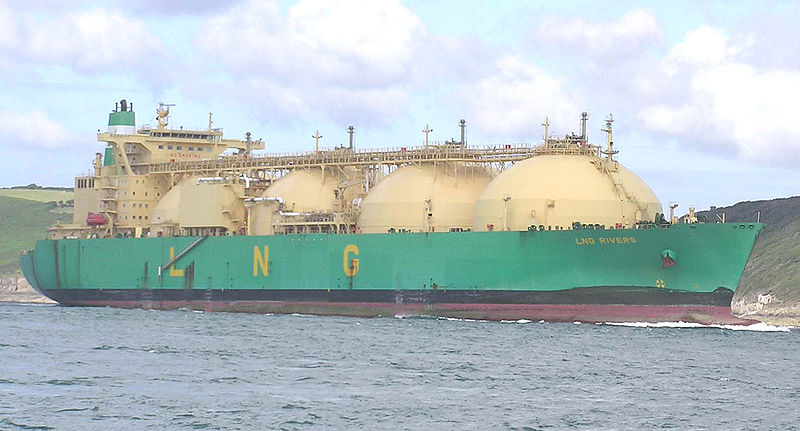
 LNG tankers are huge. This photo creation compares an average large tanker with one of the largest freighters ever to enter Passamaquoddy Bay. Using gunboats for enforcement an exclusion zone that can be up to 2 miles is used to ban all activity around the tanker, the cargo, and the terminal. Such exclusion could virtually shut down industries on which St. Andrews depends. See http://www.bayoffundy.ca/LNG/slideshow

Art MacKay

*********************************
http://telegraphjournal.canadaeast.com/city/article/1017947

Mayor objects to Maine LNG terminals
Published Thursday April 15th, 2010

ST. ANDREWS - Maine should treat its neighbour better, St. Andrews Mayor John Craig says in a letter to state Gov. John Baldacci.

Derwin Gowan/Telegraph-Journal

St. Andrews Mayor John Craig says local emergency services don't have the resources to respond to an LNG accident.

The mayor wrote to the governor this week to stress the town's opposition to proposed liquefied natural gas terminals on the Maine side of Passamaquoddy Bay. The tankers supplying the terminals would have to pass through the Canadian waters of Head Harbour Passage - between Deer Island and Campobello Island - placing undue responsibility on local emergency services, Craig said.

"As they have told us, the LNG proponents have no legal responsibility for the supply of emergency services in the event of an accident," the mayor said in the letter.

"The emergency services in this area of New Brunswick have neither the resources nor the training to even begin to respond to an LNG incident. To consider imposing this risk on those who cannot protect themselves is not the right way to be a good neighbour."

Craig wrote the letter as a result of Baldacci's Jan. 29 letter urging the United States Federal Energy Regulatory Commission (FERC) to expedite the approval process for the Downeast LNG project - one of two remaining proposals for LNG terminals in Washington County, Maine.

To Craig, this breaks a promise by the governor not to intervene in the approval process for the Downeast LNG and Calais LNG proposals.

Craig, running as an independent candidate in the Sept. 27 provincial election, challenges the governor's statement that he speaks on behalf of the people of Maine on the LNG issue.

"There are a lot of people in Maine who are not in favour of it," Craig said in an interview.

"He's broken his word that he would personally stay out of the process," Craig said in the interview. Baldacci "doesn't speak for everyone in Maine," he said.

The FERC appears to be delaying approval of Downeast LNG's application due to concern that the United States Department of Transportation's regulations concerning modelling of LNG spills might no longer be appropriate, Baldacci said in his letter.

The governor demands the same treatment for Downeast LNG as the commission gave to a project in Oregon, issuing a final environmental impact statement despite the modelling concerns.

The proponents continue to push the Maine proposals through the American regulatory process despite the stance by the Canadian government that it will not allow LNG tankers to traverse Head Harbour Passage.

Proponents argue that international shipping has the right of innocent passage through this Canadian passage to reach American shores.

Supporters of the American projects accuse Canada of using environmental concerns to prevent competition to the LNG terminal in Saint John.

Craig, like other opponents on both sides of the border, doesn't buy this.

"This type of development in the proposed locations will have a significant negative impact on the fishery, aquaculture and tourism which are the economic basis for our town," his letter states.

"We are a resort town, not unlike Camden, Rockport or Kennebunkport. The attraction of this town to summer residents and tourists depends on the natural environment and a feeling of safety and security.

"The safety and security of the citizens of Saint Andrews, Charlotte County and the Province of New Brunswick would be placed in a most precarious position with an LNG development so close to the international border."

Downeast LNG would locate its terminal at Robbinston, directly across from St. Andrews. Calais LNG would locate farther upriver across from the Canadian port of Bayside.

Proponents say the projects provide desperately needed work in a poor region of the United States. Opponents say the projects would threaten more economic activity than they would create. 

Media Credit: photo creation by Art MacKay from web sources. Base photo is Bangor Daily News.

Thursday, October 22, 2009

NOT SO "Innocent Passage"

Get the pictures and subscribe at: http://fundytides.blogspot.com

Our american Friends love to talk about "innocent Passage" and their right to pass through Canada's inland waters at Head Harbour Passage to reach their proposed LNG terminals in Passamaquoddy Bay..

I thought you all might be interested in the good word from the UN. So much for the "innocent" rights of our American friends.

Here it is:

Updated 12 February 2009

Status of the Convention and its implementing Agreements

Link to the Oceans and Law of the Sea: Status of the Convention and the implementing agreements
In its resolutions on oceans and the law of the sea, the General Assembly continuously stresses the importance of increasing the number of States parties to the Convention and the Agreement relating to the implementation of Part XI of the Convention in order to achieve the goal of universal participation. The General Assembly also reiterates its call upon all States that had not done so to become parties to these instruments.
The United Nations Convention on the Law of the Sea was open for signature on 10 December 1982 and entered into force on 16 November 1994. Out of 159 original UNCLOS signatories, 29 have yet to ratify. From among 38 States that did not sign UNCLOS or were not independent States at the time of its opening for signature, 17 have acceded or succeeded to it. Certain coastal States have not yet expressed their consent to be bound by the Convention. These were,  as at 30 September 2005: five in the African region (Republic of the Congo, Eritrea, Liberia, Libyan Arab Jamahiriya and Morocco); 10 in Asia (Cambodia, Democratic People’s Republic of Korea, Iran (Islamic Republic of), Israel, Niue, Syrian Arab Republic, Thailand, Timor-Leste, Turkey and United Arab Emirates), one in North America (United States of America) and six in Latin America and the Caribbean (Colombia, Dominican Republic, Ecuador, El Salvador, Peru and Venezuela). It appears, however, that in certain States non-parties, internal procedures are under way to enable them to become parties to UNCLOS. Developing landlocked States in Africa and Central Asia should also ratify or accede to UNCLOS, as Part X of UNCLOS dealing with access to and from the sea and freedom of transit provides the basic legal framework for the negotiation of modalities of such access and transit.

The Agreement relating to the implementation of Part XI of the Convention was adopted on 28 July 1994 (General Assembly resolution 48/263) and entered into force on 28 July 1996. The Agreement is to be interpreted and applied together with the Convention as a single instrument, and in the event of any inconsistency between the Agreement and Part XI of the Convention, the provisions of the Agreement shall prevail. After 28 July 1994, any ratification of or accession to the Convention represents consent to be bound by the Agreement as well. Furthermore, no State or entity can establish its consent to be bound by the Agreement unless it has previously established its consent to be bound by the Convention or unless it establishes such consent to be bound by the Agreement and the Convention at the same time.

Not all States parties to the Convention are parties to the Agreement relating to the implementation of Part XI. A number of States which became States parties to the Convention prior to the adoption of the Agreement on Part XI have yet to express their consent to be bound by the Agreement (see the table).These States should take the necessary steps in order to accede to that Agreement and thus to put their participation in the work of the International Seabed Authority on a sound legal footing.

The Agreement for the implementation of the provisions of the United Nations Convention on the Law of the Sea of 10 December 1982 relating to the conservation and management of straddling fish stocks and highly migratory fish stocks (the 1995 Agreement on Fish Stocks) was adopted on 4 August 1995 by the United Nations Conference on Straddling Fish Stocks and Highly Migratory Fish Stocks. Unlike the Agreement relating to the implementation of Part XI of the Convention, there is no direct linkage between the 1995 Agreement on Fish Stocks and the Convention with respect to establishing the consent to be bound.

The Agreement was opened for signature until 4 December 1996 and received a total of 59 signatures.  The Agreement entered into force on 11 December 2001, 30 days after the date of deposit of the thirtieth instrument of ratification or accession. Although the Agreement provides, in its article 41, for the possibility of its provisional application, no State or entity has notified the depositary of its wish to do so.

**************************

If you are interested in more on existing recent boundary treaties between Canada and USA as related to the UN and UNCLOs, these might prove to be a fun read. Enjoy!!

 Treaty to submit to binding dispute settlement the delimitation of the maritime boundary in the Gulf of Maine area, 29 March 1979
 Special Agreement between the Government of Canada and the Government of the United States of America to submit to a Chamber of the International Court of Justice the delimitation of the maritime boundary in the Gulf of Maine area, 29 March 1979
 Case concerning Delimitation of the Maritime Boundary in the Gulf of Maine Area (Canada/United States of America) International Court of Justice, 12 October 1984

Friday, October 16, 2009

"Listen up" Governor Baldacii - Passamaquoddy Bay is a coastal estuary.


Seems New England Governors will commit themselves to "safeguard coastal and estuarine lands". If this is the case, why did Governor Baldacii's advisors not tell him that the proposed sites of the LNG terminals in Passamaquoddy Bay are on "coastal and estuarine land". I know this, every citizen of Quoddy knows this, the IJC knows this, the Government of Canada knows this, numerous state and federal agencies know this ... it's no secret. Perhaps you can have it two ways at the same time? Kind of a bipolar government?

My thoughts tonight.

Thanks Vivian

****************************

"A Lasting Legacy", the just-released recommendations of the "Report of the Blue Ribbon Commission on Land Conservation" ordered by the New England Governors Conference (NEGC) and accepted by them at their Sept. 15 meeting in New Brunswick. 

The Commission ... recommends five compelling goals for regional collaboration across New England, a set of policy priorities upon which to build a regional conservation strategy. These are:
1. Keep Forests as Forests,
2. Keep Farmlands in Farming,
3. Connect People to the Outdoors,
4. Protect Wildlife Habitat, and
5. Safeguard Coastal and Estuarine Lands.

The full "
Report of the NEGC Commission on Land Conservation" (5 MB) can be downloaded from the N.E. Governors' Conference website:
http://www.negc.org/documents/2009/Conservation.pdf


Get the pictures and subscribe at: http://fundytides.blogspot.com
Photo Credit: Art MacKay 
Note: Proposed Calais LNG site is up the estuary near Devil's Head

Saturday, October 10, 2009

LNG - Governor Baldacci declares Maine's right to transit Candian waters in the Bay of Fundy ... and where else in Canada?

Get the pictures and subscribe at: http://fundytides.blogspot.com


The LNG tanker route at Head Harbour Passage. Brian Flynn photo.

Maine must not cede rights to maritime transit

By John E. Baldacci
Special to the BDN


There is much that binds Maine and New Brunswick together. We have a long and shared history, common borders and many joint economic opportunities. During my term as governor, I have worked hard to increase cross-border cooperation on a number of issues critical to both sides.

And we have made great progress by recognizing that our region is stronger when New England and eastern Canada are able to work together.

But these strong relations do not guarantee that we will agree on all issues.

Right now, Maine and the United States are in a heated dispute with Canada and New Brunswick over shipping in Passamaquoddy Bay, the St. Croix River and through Head Harbor Passage.

Passamaquoddy Bay and the St. Croix River are boundary waters between the United States and Canada.

According to international law, treaties between the U.S. and Canada and current practice, ships headed to port in Maine have as much right to use the passage as ships headed to Canada. The U.S. State Department has taken a strong and consistent position that all vessels enjoy a nonsuspendable right of innocent passage into and out of Passamaquoddy Bay through Head Harbor Passage. This is guaranteed by the International Law of the Sea Convention.

Canada disagrees and has asserted, without evidence, that the river and bay are “internal” Canadian waters, and commerce there can be controlled and regulated by Ottawa.

In the simplest language possible, that’s wrong.

Ships heading for Maine and the United States and Canada have the right to travel up the river, as they do now.

The issue of right of passage has been tied up with two current proposals to develop liquid natural gas terminals in Maine. Canada, which has an LNG terminal of its own, is attempting to block the developments on our side of the border.

While I support the development of LNG facilities in Maine as long as they meet all environmental and safety requirements and have the support of the host communities, the issues along the St. Croix, Head Harbor Passage and Passamaquoddy Bay go much deeper than these two proposed projects.

Today, Canada and New Brunswick have made the decision that it is in their best interest to attempt to block LNG tankers from reaching port in the United States.

Tomorrow, the decision could be made that other types of commercial traffic should be blocked. As Maine works to develop and grow exports, there is great potential for wood pulp, biofuels, wood chips and any number of other products to be shipped down the St. Croix to markets around the world.

Annually, more than 100 deep draft cargo ships visit the ports of Eastport in the U.S. and Bayside in Canada already, and the U.S. Coast Guard uses the waterway to reach the ocean. If Canada’s claim is left unchallenged, that traffic will also be left to the discretion of Ottawa.

Whether a person supports LNG in Calais or Robbinston, this question is much larger.

It is not appropriate for the Canadian government to hold control over commerce in Maine and the United States.

As to the specifics of the LNG proposals, the Federal Energy Regulatory Commission has a process in place to judge whether the locations are appropriate, and New Brunswick is rightly participating in that process as are supporters and opponents of the developments.

FERC is the best venue for the issue of LNG terminal location to be resolved.

There are legitimate concerns about the projects, and opponents should have the right and the opportunity to be heard. Questions have been raised about the safety of LNG tankers in Head Harbor Passage, Western Passage and Passamaquoddy Bay. According to the United States Coast Guard, which studied the issue, those areas are suitable for tanker traffic. In addition, the communities in Calais and Robbinston have supported the projects.

The proposals deserve a chance to be judged on their merits, not on the disposition of the Canadian government.

I have met with the Obama administration and with the U.S. State Department, and both have reiterated their support for the right of innocent passage through Head Harbor Passage.

Whether LNG terminals are developed in Washington County or not, we cannot cede control of commerce in Maine to another country, no matter how well we are able to cooperate on other issues.

John E. Baldacci is the governor of Maine.

11 comments on this item
r
Yes ole great baldi, but it seems to me while our rights are being protected dealing with Canada, that maybe we could be moving forward in finding another more suitible place for the dang tankers to off load. I really don`t know if we need one since they are already a short distance north and south of us . But I will respect the opinions of others that are more in the know.
If Canada prevails on this matter, we should demand an accounting of what the ships that go to Bay Side terminal in New Brunswick are carrying. Are they carrying hazerdous materials that could lead to a natural disaster? Endangering the ecological balance of Passamoquody Bay?

What if the US Navy decided to bring Nuclear Submarines to Eastport? What could or would Canada do to stop their passage?
Governor Baldacci and the US Department of State ignore the ongoing US refusal to ratify membership to the UN Convention on the Law of the Sea (UNCLOS). As UNCLOS makes perfectly clear, sovereigns must have agreed to the terms of (ratified) the treaty in order to enjoy its benefits. Without ratification, the US has no recourse, as even admitted in the Bangor Daily News by US Coast Guard attorney CAPT Charles Michel, Chief, Office of Maritime and International Law.

The Governor's support for LNG, so long as host communities support the project, contradicts his own premise, since the vast majority of people -- in the thousands, as opposed to the fewer than 300 who have voted in favor of the two projects -- in the Passamaquoddy Bay community oppose these projects.

Additionally, Gov. Baldacci's support contradicts his own Energy Plan. His plan requires a year-long "dialogue" on LNG to determine if it is a good fit for Maine -- a process that has not yet begun.

The Governor's attempt to assert Canada has an agenda other than safety of its citizens and environment is unfounded and unsubstantiated. Innocent passage is the issue, as even the world LNG industry indicates. The Society of International Gas Tanker and Terminal Operators (SIGTTO), representing virtually the entire world LNG industry, has published best practices for LNG terminal siting. LNG terminals in Passamaquoddy Bay cannot be made to fit those best practices. Canada's prohibition is in perfect agreement with the industry on this matter. The US, on the other hand, brushes aside those best practices, rationalizing that they are not law.

Canada voiced its prohibition of these projects in 2007. The real puzzle is why Governor Baldacci and the LNG developers refuse to relocate these projects in industry-compliant locations instead of using a flawed argument to pick an unnecessary and winless fight.
I have been informed by the US Coast Guard they are currently investigating the issue of ammonium nitrate shipments to Bayside, NB. For the same reason as Canada's ban on LNG transits into Passamaquoddy Bay, the US would be within its authority to ban ammonium nitrate transits in US waters.
"Canaport LNG, a partnership between Irving Oil (25%) and Repsol YPF (75%), is constructing a state-of-the-art LNG receiving and regasification terminal in Saint John, New Brunswick that will begin operations in late 2008. It will be the first LNG regasification plant in Canada, sending out natural gas to both Canadian and American Markets. The LNG have a send-out capacity, or the ability to distribute via pipeline, 1 billion cubic feet (28 million cubic meters) of natural gas a day after it has been regasified from its liquid state.[8]..."
http://en.wikipedia.org/wiki/Saint_John,_New_Brunswick

Is Canada possibly trying to protect its economic interests under the guise of environmental concerns, or are there genuine (excessive) environmental risks/concerns in Maine's proposal?
Canada and New Brunswick have both repeatedly stated they do not oppose LNG development in Maine. They simply oppose LNG in Passamaquoddy Bay, due to it being an unsafe fit.
Can the validity of their concerns be accurately and non-subjectively assessed?
The LNG industry terminal siting best practices indicate...
• long, winding, inland waterways, with high tides and fast currents;
• with existing conflicting uses; and
• >>> where LNG vapors from a release could affect civilian populations <<<
...are unfit for LNG facilities.

The Passamaquoddy Bay proposals would require thousands of civilians in New Brunswick and Maine be subjected to LNG ships' Federally-defined 2.2-mile-radius Hazard Zones. There is no question that Passamaquoddy Bay does not conform to LNG industry best practices.
Note that Canaport LNG is in a rural industrial area, adjacent to an oil refinery, 5 miles across the water from Saint John, NB -- well outside US Federal Government-defined Hazard Zones.
Thanks for the information.
Please go to www.bayoffundy.ca/LNG/ .The first article by Cliff Goudy of MIT shows how ridiculous the "innocent passage" position really is. Two google map representations show the difference between the approaches to Saint John and the approaches to Robbinston and Red Head in Passamaquoddy Bay via Head Harbour Passage. Huge difference wouldn't you say?

Also, the area supports a long-time sustainable industry based on tourism, fisheries, aquaculture, education, research, etc. that brings in between a half billion and one billion dollars each year. These businesses will be seriously disrupted by the exclusion zone that will exist around LNG tankers (2 miles ahead, one mile behind, and 1000 yard on each side - underway, at port, or during layover as I recall). These resource-based industries depend on an ecosystem that supports the highest biodiversity on the Atlantic coast of Canada, if not north of Cape Cod. This has been proven and substantiated scientifically. The reports are on the record at FERC.

Finally, the citizens of Quoddy, both Canadian and American, are the ones that wish to protect their homeland and the thousands of jobs that depend on this unique environment. It really has nothing to do with politics or Irving other than the Prime Minister, Premier and others have agreed to support our position in this serious matter. We pitched them and they are standing up for their electorate and Canada's rights.

To learn more about about why this place is so special, go to www.bayoffundy.ca/LNG/slideshow to see a presentation that was prepared over 2 years ago but is still valid today. Also ilovequoddywild.blogspot.com shows the importance of Head Harbour Passage to whales, birds, fish, and humans right now. Several dozen endangered species, including the North Atlantic right whale, finback, and Harbour Porpoise, are in our trust. You will be astounded by the life that has been reported in Head Harbour Passage and vicinity this summer.

All of the scientific publications supporting these statements are in the public domain. It is sad that the Governor and others in Maine have not taken the time to learn for themselves how important Head Harbour Passage, West Isles, and Cobscook Bay really are. What's worse is the demonization of those of us here who are simply trying to protect our homes, jobs, and the environment that supports them ... for me that includes many generations from both sides of the border.

Finally, the contention that Head Harbour Passage is internal Canadian waters is supported by law, treaty, and definition. It's all in the documents folks. But, I admit it really does take patience and time to wade through to find the answer. It's really much easier to toss of words like "innocent passage", "NIMBY" and to use threats and insults.

Oh, by the way, if the Americans that control the Bayside port want to pack up and go home., that's okay by me ... and most of the citizens over here as well! What they have done and wish to do to our coast is and will remain, a moral sin and represents everything that you can expect from the LNG developments in Passamaquoddy Bay ... a future of destruction.