Saturday, February 26, 2011

TOURISM: Contact Smudge at Fairmont Algonquin Hotel

With Reach like this (Malayia), the Fairmont Algonquin Hotel is more than just a classy place to stay. It functions as an icon that leads people to New Brunswick and St. Andrews-by-the-Sea.

Smudge? He's the dog-in-residence. You can email him/her(?) at: smudge.algonquin@fairmont.com

Art

*********************

Golden Labrador Toby 2007Image via WikipediaFairmont goes to the dogs!
By KEE HUA CHEE

Some hotels allow you to bring your own dog but only select Fairmont hotels have resident dogs for guests to walk.

Fairmont Hotels & Resorts, a five-star chain of hotels, has its own inhouse canine brigade. Guests who miss their dogs when they are on holiday can take these Fairmont dogs for walks.

The Fairmonts with Canine Ambassadors have a Canine Concierge who keeps an appointment book for hotel guests to book the dogs on a first come-first served basis. Each guest is allowed to walk the dog for a maximum of two hours and four walks are scheduled each day. The adorable creatures will enjoy a much needed siesta after every two walks. All have been trained to be people tolerant and many are former guide dogs for the blind so they are accustomed to walking through busy streets.
Jordy at Fairmont Richelieu

The Fairmont Waterfront Vancouver was the first in the chain to introduce a K9 ambassador when some guests half jokingly suggested the hotel should have a battalion of resident dogs since many guests were happy to walk them on the waterfront. That was back in 2002 when the hotel took up the challenge by bringing in Morgan, a black Labrador who is now enjoying his dog days in happy retirement. It was such a success with a dramatic increase of room nights that other Fairmonts have followed.


Almost all of Fairmonts’ Canine Ambassadors are large dogs like Labradors or Retrievers. For a sense of comfort and security, it is better to have big dogs as your companion while exploring a foreign city.

At Fairmont Mount Kenya Safari Club in Kenya, Golden Retrievers Volga and Ducia stay in the courtyard so guests can take them for walks over 40ha of the resort’s property.

Catie, a black Labrador originally trained as a guide dog with the Guide Dogs Foundation for the Blind in New York, changed careers to become a Canine Ambassador for the swanky Fairmont Copley Plaza in Boston. Now affectionately called Catie Copley, she spends an hour each day with children at the Boston Public Library and is especially good with hotel guests who are ailing.
Santol at Fairmont Le Chateau Frontenac, Montreal.

Catie Copley is the star character in two children’s books, the second of which includes her colleague Santol, a Canine Ambassador from Fairmont Le Chateau Frontenac the palatial hotel in Montreal, Canada. The first book Catie Copley was a best-seller when it appeared in 2007 and now Catie Copley’s Great Escape follows the adventure of Catie Copley as she takes her first trip outside the United States to visit Santol in Quebec!

Smudge the golden Labrador at Fairmont Algonquin New Brunswick, Canada, welcomes guests in the lobby by furiously wagging her tail. Marcus of Fairmont Chateau Lake Louise in the Canadian Rockies is particularly good at playing fetch. Many play prominent roles as the community’s liaison officer and are called upon during official events just to sit and look glamorous. Each guest is taught the commands the dog knows. However, you are not allowed to bring the dog to your room for sleepovers!

You can also keep in touch with your doggie acquaintances through what Fairmont artfully calls “Ani-MAIL”!

These pooches have their own e-mails, eg mavisthedog@fairmont.com,catie.copley@fairmont.com, beauthedog@fairmont.com,smudge.algonquin@fairmont.com or lcf.santol@fairmont.com! Catie, Santol and Sonny even have their own Facebook pages; can you believe it?

This may be seen as an extra-canine affair so don’t ever let your own dog know you are keeping in touch with his or her rival for your affection!


Get the pictures and subscribe at: http://fundytides.blogspot.com
Enhanced by Zemanta

TOURISM: Americans bypassing southwest N.B.: officials

Tourism and economic development officials say it's no surprise the Algonquin Hotel in St. Andrews is losing money because too many American tourists are bypassing the region.

The provincial government lost nearly $2 million on the hotel and the nearby golf course in 2009 and this week Tourism Minister Trevor Holder announced Fairmont will no longer manage the property.

Michael Rouse, the executive director of Enterprise Charlotte, said there should be a visitor information centre along the four-lane highway to direct American tourists to the town.

'It's our belief that we need an appropriate gateway to represent the province properly.'— Andreas Haun, Charlotte Coastal Regional Tourism Assoc.

"To not have a tourism information centre that can let people know they're passing through, you know the number one resort community in Atlantic Canada, you're missing an opportunity," Rouse said.

The region lost its highway visitor information centre a couple of years ago when the new highway went in and has been lobbying the provincial government for a new one ever since.

Andreas Haun, the general manager of Kingsbrae Gardens and a member of the Charlotte Coastal Regional Tourism Association, said the entire province would benefit from a new, highway-accessible centre in St. Stephen.

"It's our belief that we need an appropriate gateway to represent the province properly," Haun said.

"With so much traffic on that bridge, it is crucial we have an appropriate visitor's centre there."

Haun said pamphlets on a shelf aren't enough anymore.
Bright future

When Holder announced the Algonquin would no longer be managed by Fairmont, he said he saw a bright future for the Tudor-style hotel that first opened in 1889.

The tourism minister said the number of American tourists is up 10 per cent over the past year.

"That tells me there's a market for selling New Brunswick around the world and throughout the United States and it tells me that a world-class iconic facility like St. Andrews Algonquin is still needed," he said.

The hotel needs up to $20 million in upgrades and together with the Algonquin golf course lost almost $2 million in 2009.

It also employs 250 people in peak season and generates up to $6 million a year for the local economy.

The provincial government leased the Algonquin hotel in 1973 and bought it in 1984.

During pre-budget talks, the provincial government suggested that selling it could be a way to help tackle the deficit.

Media Credit: Art MacKay
Get the pictures and subscribe at: http://fundytides.blogspot.com
Enhanced by Zemanta

WETLAND: NB Wetland Interests collide.

The New Brunswick Wetland Conservation Policy has been guiding wetland protection since 2002. This past January, the Department of Environment released the operational guidelines that outline how this policy is implemented. As part of the guidelines, a predictive mapping tool has been created. Immediately after this map was released by the DENV, there was pushback by municipalities and developers, claiming that a "new" wetland policy is stifling development across the province. In response to this outcry, the Minister of Environment, Margaret-Ann Blaney, announced a round of public meetings on the topic of wetlands. NatureNB 
*******************
Salt marshImage by WarriorMare via Flickr


Environment minister to engage New Brunswickers on the topic of wetlands11 February 2011

FREDERICTON (CNB) – Environment Minister Margaret-Ann Blaney will participate in public meetings across the province to engage New Brunswickers on the topic of wetlands.


"Wetlands continue to be a topic of discussion in our province and are of particular interest to developers and environmental groups," said Blaney. "This tour will give the government the opportunity to communicate with New Brunswickers and to hear their concerns and comments about wetlands in our province."

The meetings will be held between Feb. 28 and March 10 in Fredericton, Saint John, Moncton, Miramichi, Tracadie-Sheila, Campbellton, Edmundston, Grand Falls and Woodstock.

"I encourage New Brunswickers interested in the issue of wetlands to participate in these meetings," said Blaney. "I also invite individuals interested to visit the Department of Environment's website for information about what wetlands are, the benefits they provide to our province and the regulations that government has in place to protect them."

The public is also invited to send comments by way of e-mail, env-info@gnb.ca.

The following meetings are scheduled:

Saint John
9 a.m. to 11 a.m.,
Monday, Feb. 28,
Lily Lake Pavilion, Wallace-MacMurry Room,
55 Lake Dr. S.

Moncton (Dieppe)
2:30 p.m. to 4:30 p.m.,
Monday, Feb. 28,
Collège communautaire du Nouveau-Brunswick, Dieppe campus, auditorium,
505 du Collège St.

Miramichi
9 a.m. to 11 a.m.,
Tuesday, March 1
Rodd Miramichi River Hotel, Cains Room
1809 Water St.

Tracadie-Sheila
10:30 a.m. to 12:30 p.m.,
Wednesday, March 2,
Town hall,
3620 Principale St.

Campbellton
7 p.m. to 9 p.m.,
Wednesday, March 2,
Campbellton Civic Centre, Banquet Room,
44 Salmon Blvd.

Edmundston
9:30 a.m. to 11:30 a.m.,
Thursday, March 3,
Université de Moncton, Edmundston campus, Amphithéâtre Louis-A.-Lebel,
165 Hébert Blvd.

Grand Falls
1 p.m. to 3 p.m.,
Thursday, March 3,
Town hall,
131 Pleasant St., Suite 200

Fredericton
10 a.m. to noon,
Friday, March 4,
Killarney Lake Lodge, Rotary Room,
1600 St. Mary's St.

Woodstock
2 p.m. to 4 p.m.,
Thursday, March 10,
Royal Canadian Legion,
109 Carleton St.

LINK:● Department of Environment: www.gnb.ca/environment

More information on the sessions: www2.gnb.ca/content/gnb/en/news/news_release.2011.02.0147.html The new guidelines and maps can be found at http://www.gnb.ca/0009/Wetlands/index-e.asp More information is also available at www.nben.ca/

Get the pictures and subscribe at: http://fundytides.blogspot.com
Enhanced by Zemanta

Thursday, February 24, 2011

TOURISM: Algonquin hotel to remain open: minister

Posted: Feb 23, 2011 1:08 PM AT 

Last Updated: Feb 23, 2011 7:30 PM AT 

The Tudor-style hotel originally opened in 1889. (Fairmont.com)The Tudor-style hotel originally opened in 1889. (Fairmont.com)
Tourism Minister Trevor Holder is reassuring people in St. Andrews that the Algonquin Hotel will remain in operation.
The New Brunswick government says the Fairmont hotel chain has decided not to renew its contract to manage the historic Algonquin Hotel and golf resort in St. Andrews.
Holder said Wednesday the contract with Fairmont Raffles Hotels International expires Dec. 31.
Holder said the province will now find a professional real estate firm that specializes in marketing, selling and leasing resorts to look at all options for the Algonquin's future.
"By investigating these options we have a single objective, to ensure that the Algonquin will remain what it is, an icon for St. Andrews and the province of New Brunswick."
The hotel needs up to $20 million in upgrades and together with the Algonquin golf course lost almost $2 million in 2009.
It also employs 250 people in peak season and generates up to $6 million a year for the local economy.
The province leased the Tudor-style hotel in 1973 and bought it in 1984. It originally opened in 1889.
During pre-budget talks, the government suggested that selling it could be a way to help tackle the deficit.
The hotel's website says the guest list has included Sir John A. Macdonald, Theodore Roosevelt and Princess Diana.

Get the pictures and subscribe at: http://fundytides.blogspot.com

Tuesday, February 22, 2011

NUCLEAR WASTE: So the media is deciding that it's okay to dump nuclear wastes in New Brunswick!

Well here we go again. Now it's the Federal Government who thinks its okay to locate nuclear waste dumps in NB because our media is supportive! So whatever happened to the plan for the Canadian Shield ... better geology, no population?

Art

*******************Capsule for nuclear waste.Image via Wikipedia

NB: Fed document suggests Sask., N.B. most receptive sites for nuclear waste dump
The Canadian Press - February 20, 2011

[MONTREAL, QE] - The federal government is paying close attention to public opinion in the ongoing search for a nuclear waste site - and it detects some favourable signs in New Brunswick and Saskatchewan.

The Nuclear Waste Management Organization (NWMO) kicked off a process last spring to find a community willing to host an underground complex that would serve as a storage dump for all the country's nuclear waste.

Though the selection process could take as long as a decade, federal officials at Natural Resources Canada reviewed the initial phase of the process several months ago.

Obtained by The Canadian Press through Access to Information laws, the document summarizes public opinion in the four provinces that have nuclear-related industries and are the most likely sites of the underground repository.

The document noted that the Ontario government had yet to speak publicly about the selection process. It detected more vocal opposition in Quebec.

“In Quebec, the National Assembly adopted a motion on October 30, 2008, banning the storage in Quebec of nuclear waste that comes from other provinces,'' it said. “There is also public resistance to siting such a facility anywhere in (Quebec).''

But the report cited a more receptive climate for the multibillion-dollar project in New Brunswick and Saskatchewan.

The document said, with respect to New Brunswick: “Media reports have been largely supportive of the NWMO's proposed siting process and little public resistance to the NWMO's process has been encountered.''

It went on to say of Saskatchewan: “The Government of Saskatchewan issued a (2009) news release saying it was reserving decision on supporting Saskatchewan communities interested in hosting a waste management facility. Media reports and public comments, however, have been generally supportive.''

The NWMO, a non-profit group mandated by Ottawa to come up with long-term solutions for the country's nuclear waste, wants to build an underground mausoleum for millions of spent radioactive bundles that power nuclear plants in New Brunswick, Quebec and Ontario.

Though Sasketchewan doesn't have a nuclear power plant itself, it is also being considered as a potential location because of its large uranium industry.

The NWMO says seven communities across the country have formally expressed interest in hosting the underground repository: Creighton, English River First Nation and Pinehouse in Saskatchewan, and Ear Falls, Ignace, Schreiber and Hornepayne in Ontario.

But these communities have only just reached the second stage of a nine-step process that will ultimately decide the repository's location. At this point, they are entitled to receive information about what the project entails and are then vetted for suitability.

NWMO officials stress that communities can drop out of the process whenever they like.

“We've got to take the time to do it right,'' said Mike Krizanc, communications manager at the NWMO.

“It is a decision that will be taken many years from now. Nothing is imminent.''

Wherever the repository is ultimately built, it is sure to transform the local economy.

The construction phase alone could bring as many as 1,000 jobs to the rural, sparsely populated communities that have expressed an interest so far.

“There would be a huge impact on a smaller community,'' Krizanc said. “There are going to be social issues that have to be addressed.''

But before moving forward, officials will check the suitability of communities against criteria that could rule them out - including the presence of groundwater, fault lines or natural resources.

Studies in the past have cited the Canadian Shield as the ideal type of geological formation for housing a nuclear store.

Krizanc also acknowledged that a community wouldn't be chosen without the support of its provincial government.

He said the siting process was designed to incorporate as much input as possible from a wide variety of sources. This includes towns through which nuclear waste would pass on its way to the repository, and aboriginal groups whose treaties may be affected by the repository's construction.

“While the host community has an absolute veto, the question becomes how much say do other stakeholders have, and at what point do they have it,'' Krizanc said.

The decision to build a centralized storage site for Canada's nuclear waste was made by the federal government in 2007. Estimates put the price tag from $16 billion to $24 billion over the life of the facility, which could last 100 years.

Construction will be financed by a trust fund, currently worth $2 billion, which Canada's nuclear energy providers have been paying into since 2002.

Waste from the country's nuclear facilities is now being stored at seven separate sites.

Krizanc says it makes sense to store the waste - which amounts to two million highly radioactive bundles - at a single site.

Not only does it make monitoring easier and more secure, it also allows for the bundles to be retrieved if scientists in the future find ways to tap their residual energy.

But Krizanc adds that it is an ethical concern above all that drives the desire to streamline Canada's nuclear waste management.

“This generation has to take responsibility for the waste it produces,'' he said.


Get the pictures and subscribe at: http://fundytides.blogspot.com
Enhanced by Zemanta

Friday, January 14, 2011

AQUACULTURE: Opposition to Genetically Modified Salmon on PEI

Unless you are blessed with god-like prescience, this is truly something to be worried about. Additionally, this industry has a long history of poor judgement on salmon diseases, vaccination potential, stocking density and more. GMO "accidents" will go beyond remediation. Perhaps efforts should go to increasing profits by decreasing mortalities?

My opinion this morning. Art
Atlantic Salmon, Salmo salar, Taken thru glas,...Image via Wikipedia***********

GMO salmon opponents meet with Ghiz
Last Updated: Thursday, January 13, 2011 | 5:52 PM AT
CBC News


A P.E.I. coalition against genetically modified salmon says Premier Robert Ghiz has agreed to pursue more transparency around export plans by AquaBounty.

The U.S.-based biotechnology company has an egg-hatching facility in Bay Fortune where it's developing advanced-hybrid salmon designed to grow faster than traditional fish. The company touts its AquAdvantage Salmon as reaching market size twice as fast as traditional salmon.

AquaBounty is currently awaiting a decision from the U.S. Food and Drug Administration on whether its fish can be sold in the American market. If approved, the fast-growing salmon would be the first genetically modified food animal for sale in the world.

The coalition of opponents to the company's plans met with Ghiz and provincial Environment Minister Richard Brown Thursday. The group, which includes the Council of Canadians, P.E.I. Health Coalition, the Canadian Biotechnology Action Network and Earth Action PEI, has been asking Ghiz to address what it says is growing opposition to AquaBounty's development of GMO salmon in P.E.I.

Leo Broderick, vice-chair of the Council of Canadians, said the group wants public consultations on the AquaBounty export plan.

"We did get a commitment from the premier that he would play a more active, positive role in trying to get Environment Canada to be more transparent," said Broderick. "And so, he is going to write Environment Canada asking whether or not Aqua Bounty has requested approval for commercial production of GMO Atlantic salmon, salmon eggs on P.E.I. And he's going to ask that the P.E.I. government be part of the environmental risk study. That's very good."

Broderick said the Premier agreed to take the group's demands for a consultation process to the Liberal Caucus, but he ultimately refused a request to declare P.E.I. a GMO-free province.

Read more: http://www.cbc.ca/canada/prince-edward-island/story/2011/01/13/pei-aqua-bounty-transparency.html?ref=rss#ixzz1B0iUbakF

Get the pictures and subscribe at: http://fundytides.blogspot.com
Enhanced by Zemanta

Tuesday, January 11, 2011

AQUACULTURE - The truth is what we choose to believe. Are escaped Atlantic salmon really a threat to the wild salmon in Fundy?

Copyright Art MacKay
Well,  here is another business tragedy being turned into a gloom and doom story as the Atlantic Salmon Federation and others keep beating the drum that mixing stocks will damage the wild runs of salmon. I've been in the business since the inception of salmon farming in Fundy. In fact, the very first experimental farm was located at my facility in Deer Island and I started the first commercial operations there and at Eastport. Before that I carried out research along the coast of Fundy for over 20 years and what I saw suggests they are missing (or worse ignoring) the real causes. 

In the beginning,  ASF was all for aquaculture as a way to "save" the Atlantic salmon on the east coast. In fact they provided the very first smolts that went into the experimental cages at Deer Island. The concern then was they were "inferior" fighters on a rod and reel and they didn't "taste right". The first myth was dispelled when Wilf Carter was invited to angle in one of our cages. The myth of a "poor fighter" went down the drain that day. As for the flavour, we did some "blind" tests using Newfoundland salmon. I'll leave it to you to guess the results. Like the current situation, the truth is what we choose to believe.

I have yet to see convincing evidence that interbreeding between aquaculture and "wild" fish produces any detrimental results. I have read the report which is the foundation of this belief and, frankly, it is more opinion than science. One wonders if the researchers are pushing this current position because it produces research monies. 

Back in the sixties and seventies it was clear cutting in the inner Bay of Fundy that was destroying salmon spawning areas, industrial pollution,  budworm spray and agricultural chemicals that were the concern. This was followed by increasing pollution from shoreside domestic treatment facilities as well as major new types of concern such as elevated salinity from the brine line serving the potash mines in Sussex.

Now the aquaculture business is not "without sin". But it is not the source of all the woes of those that push half truths on behalf of the salmon anglers. They would be well advised to count the loss of salmon by aquaculture sites as a blessing for the angler. Perhaps some "hybrid vigour" is just what these long-since mixed-breed, so-called, "wild" salmon need?

My thoughts this morning
Art

************************
Thousands of farmed salmon escape from cages Published Tuesday January 11th, 2011 

Derwin Gowan
Telegraph-Journal

ST. ANDREWS - Nets torn during heavy winds around Christmas allowed 138,000 small farmed salmon to escape from two floating sea cages off Grand Manan.

These escapees threaten wild Atlantic salmon with parasites and disease and by mixing genes with the native fish, Atlantic Salmon Federation (ASF) president Bill Taylor said in an interview.

The wind prevented Admiral Fish Farms Ltd. from recapturing any of the escaped fish, company president Glen Brown said in a written statement.

However these fish, each less than 200 grams (seven ounces), would not likely survive in the wild, he said in the statement.

Taylor did not seem so sure that all of these 25-centimetre salmon, between the smolt state and adult stage, would die before causing trouble for the wild fish.

"When they do become sexually mature next fall, they will by instinct begin to search out rivers and run up rivers to spawn, and when they do that they will be spawning with wild salmon," Taylor said. "The progeny of hybrid aquaculture-wild salmon, they're survival is greatly reduced."

"The breach occurred on two new cages located south of Pumpkin Island, Grand Manan, when a vertical rope and chain came in contact with nets for an extended period of time during high winds," Admiral Fish Farms said in its statement.

Workers first noticed the breach Dec. 26 but high winds prevented them from confirming the loss till Dec. 30, the company stated.

To prevent future breaches the company does not intend to put fish back into this type of cage until design issues are resolved, according to the statement.

"Fish containment is a top priority with our company and we take any breaches very seriously," Brown said in the statement.

The company reported the escape as required by provincial regulation, Taylor acknowledged.

However, the ASF would move salmon farms to "closed containment" on land to prevent escapes as well as spread of sea lice and disease between the aquacultured and wild fish.

Thursday, December 30, 2010

TRANSPORTATION: Nova Scotia decides the Yarmouth to Bar Harbor ferry not feasible.

Commission: Current Bar Harbor ferry proposal not feasible
By Ezra Silk | Dec 29, 2010
Bar Harbour Times Soup

Yarmouth, NS — After more than two months spent examining five proposals for providing ferry service between Nova Scotia and New England, the Yarmouth Area Industrial Commission has concluded that none of the proposals are financially viable. The Commission, which confirmed that it was considering a route to Bar Harbor, hopes to support a Yarmouth to New England ferry by May 2012, according to a press release distributed late Tuesday afternoon.

“At this point in time it is the Commission’s opinion that the proposals received do not meet the basic requirement of our RFP [request for proposal] process,” reads the press release.

According to the release, the Commission’s basic requirement is, “Clear confirmation of financial capacity to operate a ferry service.”

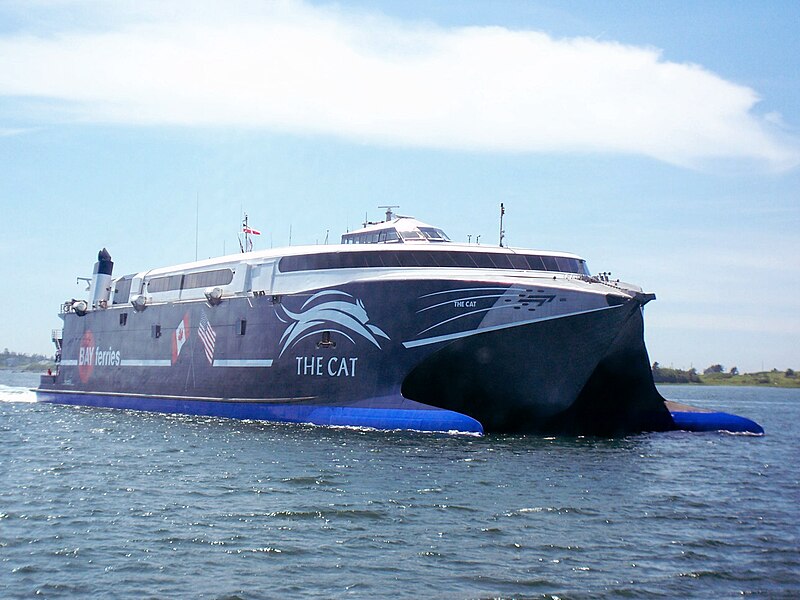
The CAT ferry service in Bar Harbor ended in December 2009, putting 120 people out of full and part-time work. According to Bay Ferries Limited, the company that operated the CAT, the route had lost its financial viability because of the struggles of the American economy, the rise of the Canadian dollar, and new U.S. passport regulations.

In the statement, the Commission acknowledged that the announcement might be disappointing to the applicants, as well as others who would welcome ferry service to their community.

“While the Yarmouth Area Industrial Commission shares the frustrations and disappointment of businesses and residents of Nova Scotia, New England and particularly Yarmouth County, we feel that we also have a responsibility to ensure that any service provider is financially capable of starting a new service and sustaining that service into the future,” reads the release.

Get the pictures and subscribe at: http://fundytides.blogspot.com
Media Credit: wikipedia.com

Monday, December 27, 2010

AQUACULTURE - Is the book 'The Salmon Connection" available?

Dr. John M. Anderson's book, The Salmon Connection is the definitive source of information on the history of Atlantic salmon aquaculture in the Bay of Fundy and northern Gulf of Maine. Anyone know who is selling it?
Get the pictures and subscribe at: http://fundytides.blogspot.com
#aquaculture

Saturday, December 18, 2010

Little border protection from Canadian Coastguard .. but huge development planned for Saint John?

While the US Coast Guard patrols our water, photographs our people, and overhauls boats in our waters, there is still little or no Canadian Coast Guard border protection in Charlotte County. I know we have an agreement of some sort going, but abrogating control of Canadian waters on the border is unwise in the extreme. As for the ability of the RCMP to perform these duties ... well they seem to think that boils down to "highway patrol" on the water.


Congratulations to Saint John, this is the perfect place for headquarters, but an "active" presence on the border is required.


The city is preparing for a final deal which will see Ottawa sell the Coast Guard site on Water Street to clear the way for more waterfront development. Just over 900-thousand dollars have been earmarked in next year's proposed capital budget for the purchase and to begin survey work and environmental assessments.

The five year capital budget projection also includes 2.8-million for repairs to the sea wall on the harbour side - and - another 400-thousand for a pedway from Market Square to the site.

The Hardman Group wants to develop more retail space - a hotel - and - condos in that area.


Turbine pulled out of Bay of Fundy

Last Updated: Friday, December 17, 2010 | 4:20 PM AT CBC News

The damaged underwater turbine in the Bay of Fundy was recovered Thursday by OpenHydro.

The damaged underwater turbine in the Bay of Fundy was recovered Thursday by OpenHydro. (Nova Scotia Power)

The damaged underwater turbine in the Bay of Fundy was recovered Thursday by Irish tidal renewable energy company OpenHydro.

The 400 tonne turbine was removed from the floor of the Minas Channel.

"The turbine is in extremely good condition," said James Ives, OpenHydro's CEO. "All the blades have failed. We have overloaded the turbine. We've underestimated the loadings in the Bay of Fundy. We underestimated the energy in the Bay of Fundy."

OpenHyrdo and Nova Scotia Power first tried to remove it in November.

That attempt was unsuccessful due to a rise in tides. Subsequent efforts to retrive it were hampered by bad weather, including strong winds.

The turbine was deployed in November 2009.

The turbine will now be towed to Cherubini Metal Works in Dartmouth for a forensic engineering assessment.

They will try to extract information on six sensor systems.

Then it will be decided if another attempt to put a turbine in the Minas Channel will happen and if it will be the refitted turbine or a new one.

Read more: http://www.cbc.ca/canada/nova-scotia/story/2010/12/17/ns-turbine-pulled-out-of-bay-of-fundy.html?ref=rss#ixzz18TgNSYVf

Irving dam criticized after N.B. flooding

Last Updated: Friday, December 17, 2010 | 9:32 AM AT CBC News

Liberal MLA Rick Doucet said many St. George residents are upset over J.D. Irving's handling of the water levels of its Lake Utopia hydroelectric dam.

Liberal MLA Rick Doucet said many St. George residents are upset over J.D. Irving's handling of the water levels of its Lake Utopia hydroelectric dam. (CBC)

Some flood victims in St. George, N.B., are questioning whether the disaster could have been prevented if J.D. Irving had released water from its Lake Utopia hydroelectric dam before the worst of this week's storm.

Residents in the southwestern New Brunswick community say they believe the company left water levels too high at the dam.

Citizens formed a local committee to examine the high water levels several years ago.

Liberal MLA Rick Doucet said corporate officials with J.D. Irving actively participated in those meetings. But Doucet said not much has came from those meetings.

"We've worked with Irving, they've been at the table, we've had some great discussions, [the Irvings are] telling us what they're going to do, but it's not happening," Doucet said.

"I think people have had it now, and people are going to want some action on this."

The company operates the southwestern New Brunswick dam to generate electricity for its mill.

A spokesperson for J.D. Irving told CBC News on Thursday that it manages the dam according to the weather and water level information it was given earlier this week.

'As a result, when we do get something like this [rain storm], we're behind the 8-ball before we even start.'— Bruce Jackson, St. George resident

The company's spokesperson said they were caught off guard when the storm exceeded all expectations.

Officials with the province's Emergency Measures Organization said this week that they have never seen water levels rise so quickly in the community.

The community's concerns with the high water levels did not just start this week when the area was hit by flash flooding.

Even in normal weather conditions, Bruce Jackson, who lives in the community, said the water levels at the dam are a concern.

"What has consistently been the concern is that the water has left at an artificially high level — by [one-], two-, three-feet high — to generate [electricity]," Jackson said.

"As a result, when we do get something like this [rain storm], we're behind the 8-ball before we even start."

Environment Canada said 172 mm fell in St. Stephen earlier this week.

Southwestern New Brunswick was among the regions hardest hit by this week's floods.

Read more: http://www.cbc.ca/canada/new-brunswick/story/2010/12/17/nb-jd-irving-lake-utopia-st-george-flood-628.html?ref=rss#ixzz18TfAXqa7

CLIMATE: N.B. flood damage 'beyond imagination': Alward

Number of flooded N.B. roads down to 70 from 120 earlier this week

Last Updated: Friday, December 17, 2010 | 10:02 PM AT Comments115Recommend66
CBC News
Charlotte County has been one of the New Brunswick areas hardest hit by flooding.
Charlotte County has been one of the New Brunswick areas hardest hit by flooding. (CBC)
The damage left behind by this week's flood that hit parts of southwestern New Brunswick is "beyond imagination," Premier David Alward said on Friday.
Many communities along stretches of southern and western New Brunswick saw extensive damage to roads, bridges and houses following the floods, with Charlotte County the hardest-hit place in the province, according to the Emergency Measures Organization.
The destruction inflicted on many of the communities is "sad," Alward said.
"It is really beyond imagination especially in parts of southwestern New Brunswick and Charlotte County. Many homes covered up to their rooftops, vehicles under water, many people displaced," Alward said.
"Throughout much of the St. John River Valley and southwestern New Brunswick and Charlotte County, many roads and the rail system has been breached."
At one point during the flood, 120 roads were partially or fully flooded, but that is now down to 70.
Bonny River flooded
All roads and bridges leading into the southwestern community of Bonny River, which is near St. Stephen, were either washed out or underwater.
The Canadian Red Cross set up shelter at the Bonny River Fire Department to help residents who lost their homes in the flood.
The main commute to and from Bonny River in recent days has been by boat, such as those operated by Cooke Aquaculture, which has been helping by ferrying people and supplies.
Many roads were fully hidden by water except for the tops of stop signs, while the local landscape was filled with broken porches and waterlogged houses.
'I love my spot on the river but as I've always said, to have the best spot,
there are prices to pay, but I think this price is too high.'— Angela Steen, Bonny River resident
Nicole Norman, who lives in nearby Second Falls, said she finally got a chance to assess the damage to her home on Thursday, and saw the inside was a disaster.
"I saved some of my daughter's Christmas gifts, that's about it. Everything else is ruined," Norman said.
Angela Steen, another Bonny River resident, said she fared a little better.
Her basement is completely flooded but she managed to save some items.
Steen said after what happened during the flood, she can't imagine living in her home much longer.
"I love my spot on the river but as I've always said, to have the best spot, there are prices to pay, but I think this price is too high," said Steen.
Steen said she is relieved the water has finally crested, but she said it will be a long time before things are fully back to normal in her community.
Relief offered
Alward toured the area Wednesday after announcing the government would extend various forms of relief to people affected by the rising waters.
The plan outlined by Alward includes complimentary reconnection of electrical services and free water testing.
Gary MacDonald wades through a flooded parking lot to get to his vehicle near the St. John River on Tuesday in Fredericton. G
ary MacDonald wades through a flooded parking lot to get to his vehicle near the St. John River on Tuesday in Fredericton.(David Smith/Canadian Press)
The premier said the government will also help with health and safety inspections and that citizens can register for funding through the disaster financial assistance program by contacting Service New Brunswick.
Alward said the government is offering residents $4,000, which will help people start taking care of their immediate needs.
Federal cabinet minister Keith Ashfield said the government is willing to help the provincial government fund efforts to rebuild after the flood.
Alward and Transportation Minister Claude Williams have estimated that millions of dollars worth of repairs need to be done to infrastructure across the province because of the floods.
A complicating factor is some road work will have to wait until the spring because the full repairs cannot be completed during the cold and snow of winter.
Read more: http://www.cbc.ca/canada/new-brunswick/story/2010/12/17/nb-flood-waters-receding-in-southwestern-nb.html?ref=rss#ixzz18TcD2neQ